(Cover image by Jeff Sedlik)
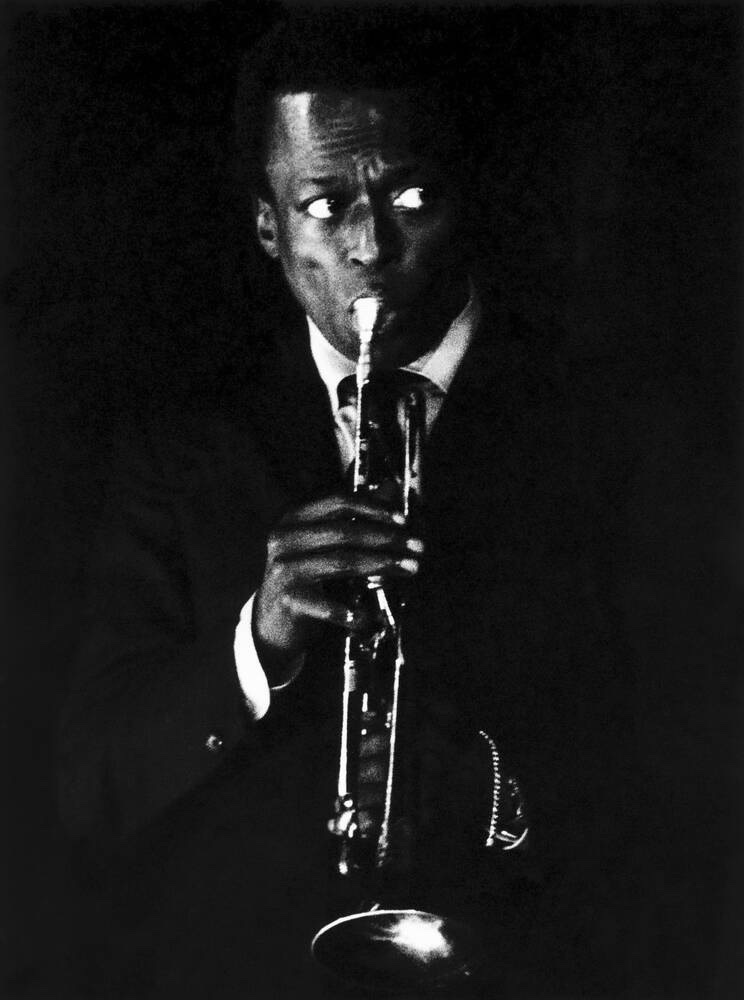
When it comes to music in general and jazz in particular, few artists mean more to me than Miles Davis. He is one of the pillars of my musical foundation.
Miles was a gift from my father, who absolutely loved jazz. He spoke often of Miles, so the name was burned into my brain long before the music was. I remember seeing Miles’s albums all throughout Dad’s record collection in my early teens, but it would be a few years before I made them part of my world.
But Miles was and is more than jazz. Fans and experts will tell you Miles changed music at least five times during his six decade career. And not just in jazz.
Miles’s music branched into areas that left the “jazz” label in the dust. For casual fans and writers, it was just simpler to stick the “jazz” label on Miles and keep moving. That is, after all, how things started.
But Miles also made inroads into fusion, funk, avant-garde, and even bits of pop. Not everyone embraced everything he played, but everyone was able to latch on to something from sometime.
It can be argued that I came to Miles’s music backward. In 1986, back in the days of Columbia House Record and Tape Club (remember them?), I ordered a copy of Tutu, Miles’s latest release. The album was soulful and funky in addition to being jazzy. I was hooked right away. This guy was more than worthy of deeper exploration.
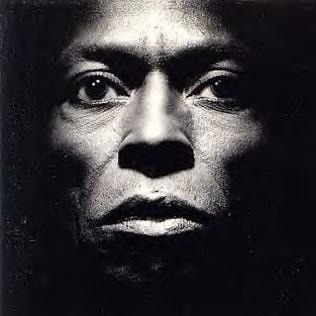
What I didn’t know was how angry more than a few jazz purists were (and had been) about Miles’s use of electric instruments. I didn’t know any better, so I just rolled with it. After all, I heard electric instruments in my music all the time!
I remember how proud I was when I showed Dad my first Miles Davis album. He smiled said, “Good. That’s a good start. That’s an interesting place to start, but I suppose that works.” I didn’t understand what he meant, but I soon would.
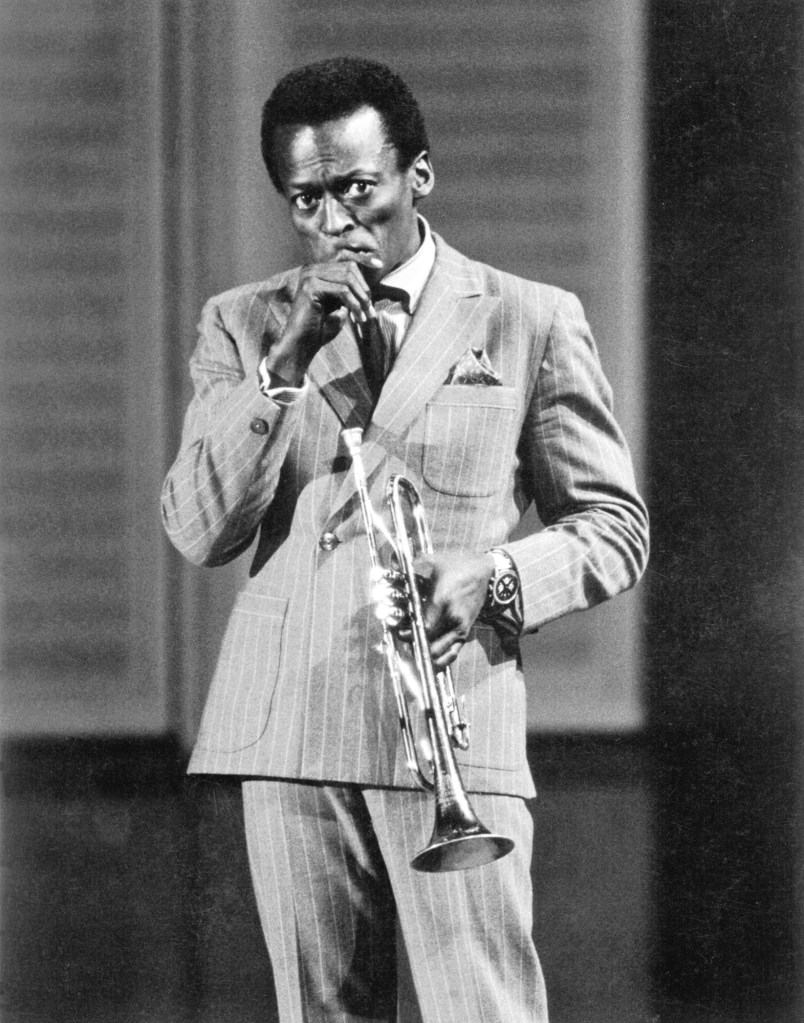
As it happened, I was waiting for my next Miles release, The Columbia Years 1955-1985 to arrive when I showed Dad my copy of Tutu, which was actually Miles’s first release for Warner Brothers Records. When the albums arrived (it was a five-LP set, if I recall correctly) and I dropped the needle on that first album, I completely understood what Dad was talking about.
The first song was called “So What,” from Miles’s landmark album Kind of Blue. It was pure jazz. I felt like I’d been hit by a thunderbolt! What. Is. THIS!? I couldn’t get on the phone to Dad fast enough. I could hear a much bigger smile on his face, followed by a joyful laugh. “THERE you go!” Dad wasn’t a jazz purist. He just wanted me to start closer to the beginning of Miles’s career.
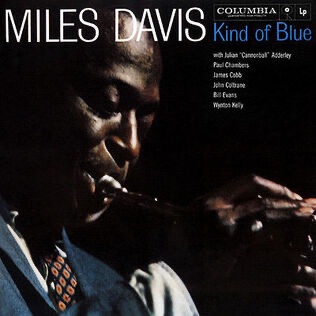
Of course, that 1959 release was far from the beginning of Miles’s career. I remember seeing The Birth of the Cool in Dad’s collection. It was released a full decade before Kind of Blue. Naturally, I had to have a copy of my own. When I put it on, I was mildly shocked by how different the music was. Jazz, yes. But nothing like Kind of Blue.
So, within a couple of months of the start of my Miles Davis education, I had already been introduced to three Miles periods: Electric Pop and funk (Tutu), Modal Jazz (Kind of Blue), and Cool Jazz (The Birth of the Cool). And there was so much more to learn!
Miles became a constant on my record player. I collected every album I could find. I spent five years trying to obtain a copy of Star People, an amazing electric album that played a major role in Miles’s comeback from the nearly six-year hiatus he started in 1975. Star People was the second studio album post-comeback, and he had hit his stride. I learned about the album via a tune called “Star On Cicely,” which was part of the Columbia Years collection.
Alas, Star People was out of print in the U.S., and I couldn’t find a copy anywhere. In 1990, while serving in the U.S. Air Force, I was transferred from Shaw Air Force Base, South Carolina to Yakota Air Base, Japan. We were just west of downtown Tokyo, and I spent a lot of time exploring the region. That’s where I found a CD copy of Star People just sitting there waiting for me. The booklet’s liner notes were in Japanese. To this day, I have no idea what they say. And I don’t care.
Star People is a tough “get” for some Miles fans, particularly the purists who wanted Miles to stay in the acoustic realm, which he abandoned in 1969. The early electric records were the first steps into uncharted territory, as the music headed toward what could generically be called fusion. I’m not saying I got all of the first fusion albums at first, but I was willing to stick it out and keep trying.
The toughest “get” for me was another landmark album called Bitches Brew, released in 1970. It was a loooonnng time before I comprehended it. I wasn’t alone. I remember seeing it in Dad’s collection. The album’s cover was striking. But it always struck me as odd that Dad never really talked about the music. It was a hard get for him, too.
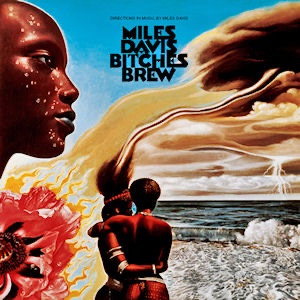
This wasn’t jazz. That much was certain. Miles didn’t even call it jazz. It’s right there on the album cover, where it says “Directions in Music.” Not jazz. Music. That’s the first key toward comprehension.
I also argue that the best way to explore Bitches Brew is on vinyl, because it offers you an opportunity to stop every 20 or so minutes to catch your breath and absorb what you’d just heard. That’s how it clicked for me. Somewhere during the first third of side three, I heard it. Everything fell into place. Now I can play the album without hesitation or issue. I even like to jam along on my guitar.
Miles Davis died in 1991. It is one of my biggest regrets that I never got to see Miles live. Despite growing up near the area, he rarely came to St. Louis, and certainly not to South Carolina, where I was stationed a couple of years after being introduced to his music. It’s a true loss for me.
It also would’ve been nice to interview him, though I can’t help but believe we might’ve ruffled each other’s feathers now and again. While I will always love the music, there are things about Miles the man that will always rub me the wrong way, namely the way he treated women. But I imagine I would’ve found a way to get through the conversation.
Based on what I know about Miles, he probably would’ve liked and respected the way I pushed back on some of those issues, even as he told me, “Get out of my house, motherfucker!” Now that I think on it, that would probably be the end of a perfect interview. I’d smile as I waked away.
So much music has come into my world since the eighties. This is particularly true of the last ten or so years. I have to make headspace for all this new music, so Miles has been pushed gently aside. But like King Crimson and Frank Zappa (the other two pillars of my personal musical Holy Trinity), I have to come back every now and then for a visit. Frankly, I don’t think I have a choice given the sheer volume of Miles Davis albums in my collection!
When I express my love for Miles’s music to friends, they sometimes ask how they can get into the music, too. So, I created a couple playlists on Spotify. One of them focuses on his acoustic period up to 1968. The second one covers the beginning of his electric era and goes through his passing. Feel free to check them out and enjoy them. There’s a little something for everyone.^
On May 26, we celebrate Miles Davis’s 100th birthday. Throughout the rest of this month, I’ll feature additional pieces about Miles. I’m also hoping to host a small forum via my YouTube channel, where I will talk with a few others about why they love Miles’s music.
I am not where I am today without the music of Miles Davis. It is only right that I pay it the utmost respect.
^ I realize some of you don’t use Spotify, for any of several reasons. I understand and respect this. But sometimes I have to go with the crowd in order to be heard. This is one of those times. I’m reasonably sure you can call up the list without actually having to use it. Jot the tunes down and check them out however you choose.
#cirdecsongs
If you enjoy this or any of my other content, please leave a like and add yourself to my mailing list.
If you would like to have your music reviewed, contact me at cirdecsongs@gmail.com


I’ve always been a bit hesitant about exploring the Miles Davis repertoire properly. That’s partly because most of his material strikes me as not much more than random notes and partly because there’s just so much of it. But I’ve always known I must be missing something. So thanks for giving me a way in with those playlists. 👍
LikeLiked by 1 person
Glad I could help! Enjoy!
LikeLike