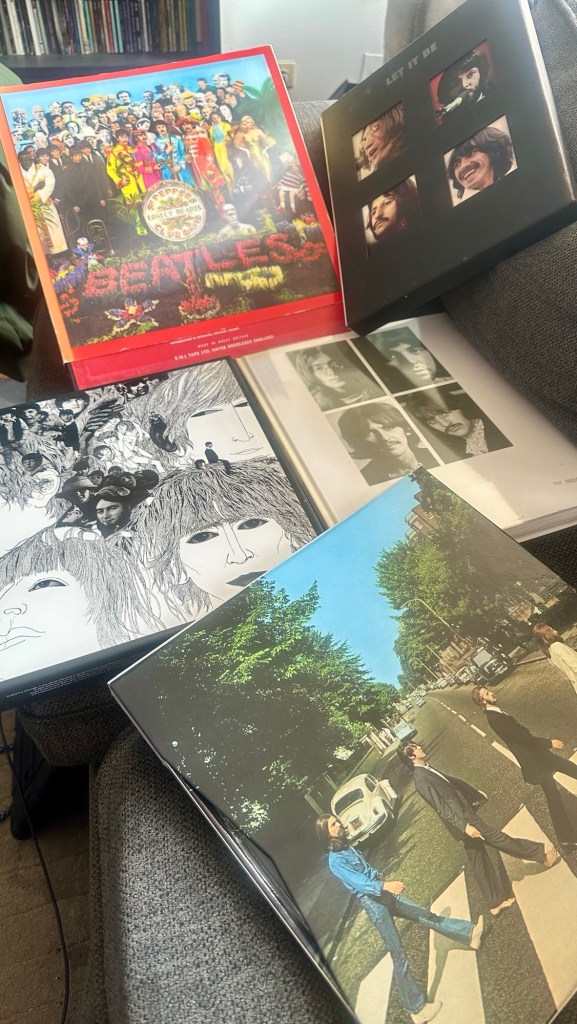
I was just as cynical as anyone else when artists started releasing “Deluxe Box Sets” of their more popular albums. “It’s a cash grab,” I said. “We’ve already heard the album, so what’s the point?”
Yeah. About that …
I’m guessing I have around 40 of them now.
None of them were cheap, but nearly all of them are worth it.
What drove me down this path? I may ask myself, “How did I get here?” (Sorry, David.) There’s no easy answer.
Maybe it was the completionism streak in me. Maybe I wanted to hear new takes on old songs. Maybe it was just plain FOMO (that’s “fear of missing out” to you uninitiated). Whatever it was, the box sets started flowing in one day and they haven’t stopped.
I have no regrets.^
Some artists have re-issued classic albums with extra bonus tracks tacked on. Sometimes they keep things on a single disc. Sometimes they add one more. In my opinion, Radiohead ranks among the best at doing this. I often find their b-sides equally as compelling as the primary album! Trent Reznor has a thing for allowing himself and others the chance to remix Nine Inch Nails tunes. I always look forward to them.
Deluxe boxes are on another level.
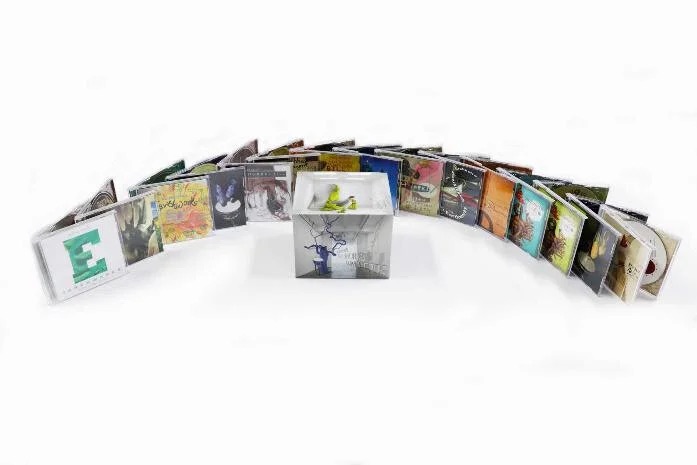
Not all boxes are created equal. Sometimes the artist gives you a chance to have a good chunk of their catalog in a single box, like Allan Holdsworth. Perhaps they’ll add an unreleased disc or two, or a live release or even a video for you to enjoy. Bill Bruford is good for this.
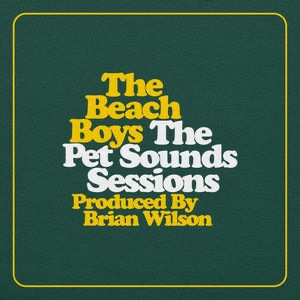
Sometimes the artist brings you into the studio and lets you listen to an album being made from beginning to end. Pet Sounds is one of my favorite albums of all time. “God Only Knows” might be my favorite pop tune ever. Rare is the day I can hear that song without crying. Imagine how I’m feeling as I hear that song come together step by step. It’s a good thing I had Kleenex handy.
Others pull out all the stops. Alternate mixes, b-sides, live tracks, hardback souvenir books, posters, trinkets, souvenirs, photos … If you’re a band superfan, these box sets are right up your alley.
When it comes to boxes, it only seemed logical that my Musical Holy Trinity — Miles Davis, Frank Zappa, and King Crimson — would have my attention (and, chances are, my money) any time they released a box. The FOMO is too strong!
To those three, you can add The Beatles. They’re a long-time love, and missing anything extra from them feels like a crime.
I won’t hit on every box from every member of the Quintessential Quartet. I’ll just hit on some of what I get a real kick out of.
THE BEATLES
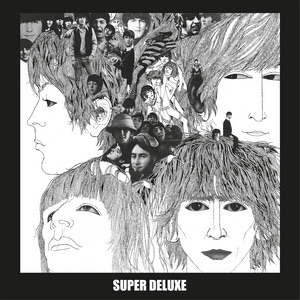
Revolver, Special Edition. Probably my favorite pound for pound Beatles album. The use of the recording studio as an instrument really came to the fore. This box only has five discs, but they’re valuable. Revolver comes in its original mono master form, plus a new stereo mix. Giles Martin (son of original Beatles producer George) did one helluva job with the new mixes.
There’s also an EP disc with “Paperback Writer” and “Rain” (think of it as 45 rpm record on CD) and two full discs of early session recordings. Best of all, there is a 100-page hardback book stuffed wide photos, essays, and a complete breakdown of the album, track by track. It doesn’t get much better.
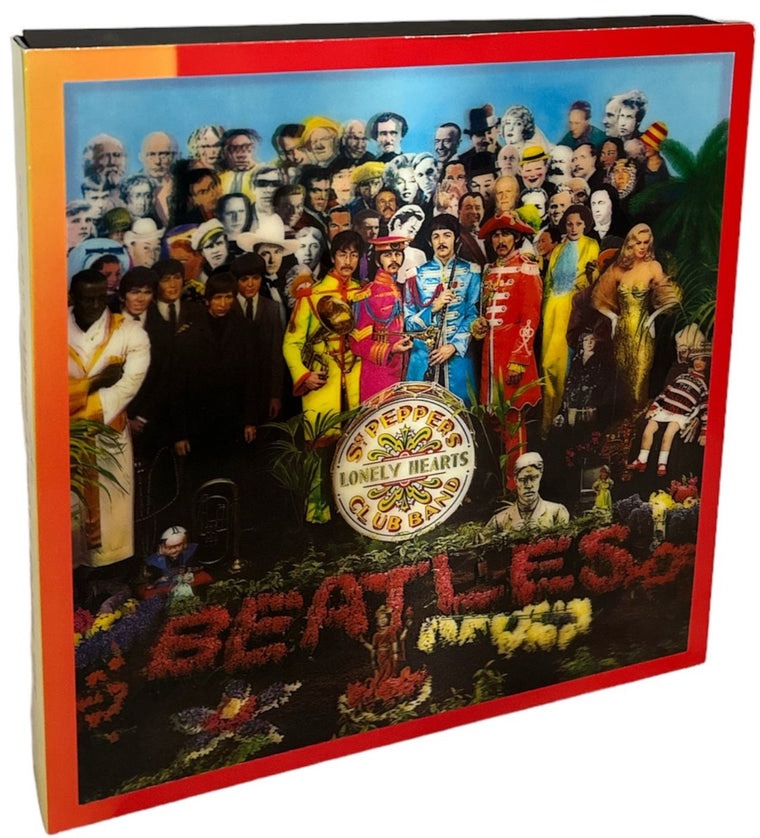
Sgt. Peppers Lonely Hearts Club Band. A stereo mix, a mono master (with bonus tracks), two session discs (some isolating a single track), a blu-ray and a DVD (which, admittedly, cover the same ground), a poster, and a couple of other souvenirs. Best of all, there is a 144-page hardback book!
This was the first Beatles box, and it set quite the precedent.
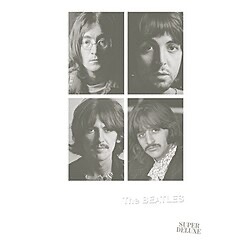
The Beatles (aka The White Album). This set is the incredibly comprehensive. The first two discs cover the original 30-song album. The third disc is the 27-track “Esher Demos,” followed by three discs containing fifty tracks from the sessions recordings.
The blu-ray disc contains the album’s stereo and mono mixes, along with mixes in Dolby True HD 5.1 and DTS-HD Master Audio 5.1. Tack on a 164-page hardback book and the Beatles fan should remain quite busy indeed.
MILES DAVIS
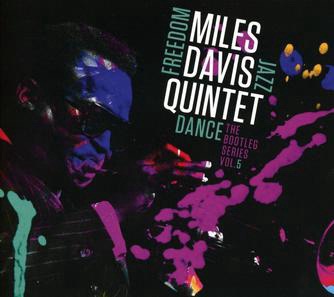
Freedom Jazz Dance. Over the years, Miles Davis deluxe sets have come in various shapes and sizes. Some contain complete recordings from various albums (like Bitches Brew), some document particular bands (like The Complete Studio Recordings of the Miles Davis Quintet 1965-‘68), some have the complete recordings of a live residency (like The Complete Live at The Plugged Nickel), and still others have been released as a series Columbia Records calls The Bootleg Recordings. I find joy in all of them.
My favorite (I think) is Freedom Jazz Dance, a Bootleg collection documenting my favorite Miles band (featuring Wayne Shorter on sax, Herbie Hancock on piano, Ron Carter on bass, and Tony Williams on drums) recording my favorite Miles album, Miles Smiles.
This set documents the recording of that album from beginning to end. What sets this apart from other such releases is the extended conversations between the band members as they bring the tunes to life. There are false starts, stumbles, and re-workings of tunes that ultimately lead to the recording that makes it to the album. It’s a Masterclass in creativity.
Had I stretched the favorites out to five, the Complete Recordings box for this lineup would definitely be part of it. So, pick that one up, too!
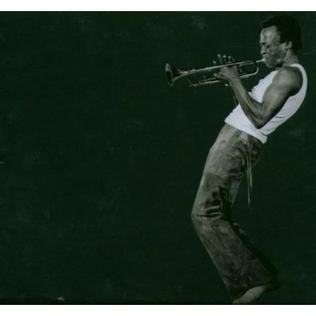
The Complete Jack Johnson Sessions. Miles began to abandon acoustic instrumentation in 1968. In ‘70, the transformation was complete and we had A Tribute to Jack Johnson. The album was created as the soundtrack to a documentary about the first African-American heavyweight boxing champion.
Miles left “traditional” jazz in the dust and fully embraced Jazz-Rock Fusion (or whatever people want to call it). It was funky. It was flashy. It grooved like nobody’s business. Jack Johnson is what we call a landmark album.
Hearing what went into bringing this album to life is quite fascinating. Miles had embraced the abstract for albums like Bitches Brew (another great box set, by the way) and the live recordings he recorded at The Fillmore (also documented via the Bootleg series). For Jack Johnson, things were tightened up and the music was more focused.
Credit for this should be given to bassist Michael Henderson, who came from Motown rather than a jazz background. Henderson laid down grooves that served as an anchor, and the rest of the band revolved around it. Contributions from John McLaughlin (guitar), Herbie Hancock (keyboards) and others turn a two-track album into molten metal.
The box set is loaded with tunes Miles wrote that led to Jack Johnson. Many of them are named after boxers like Archie Moore and Sugar Ray Robinson as well. (Miles was a boxing fanatic, by the way.) The process is every bit as cool as the final recording.
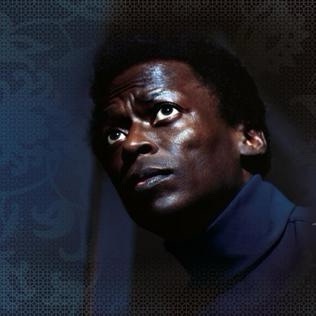
The Complete In a Silent Way Sessions. Miles didn’t just leap from acoustic to electric instruments on a whim. It took a couple of albums for him to get there.
In 1968, the Second Great Quintet (documented above) recorded their last full album, Miles In The Sky. There were subtle changes. Ron Carter played an electric bass on the album’s opener, “Stuff.” Herbie Hancock played an electric piano, and guitarist George Benson plugged in and joined the rest of the band.
The transition continued via In A Silent Way (released in ‘69), a record I love just as much for what isn’t present as much as what do is. If I’ve said it once, I’ve said it a thousand times: In A Silent Way contains some of the best use of space I’ve ever heard.
There’s a remarkable lack of clutter on this record. On the album’s opener, “Shhh/Peaceful,” drummer Tony Williams plays his hi-hat cymbal. That’s it! The remaining parts are equally as sparse. The only notes being played are the necessary ones. Nothing flashy. It’s a remarkable listening experience.
The box set documents the earliest parts of Miles’s electric transition, culminating in the album proper. Even writing excessive notes about the music seems superfluous. So, I’ll just leave it at that.
Each Miles set contains interesting essays and notes on each track, along with unreleased photos. These deluxe sets aren’t as ornate as, say, The Beatles boxes, but they definitely get the point across.
KING CRIMSON
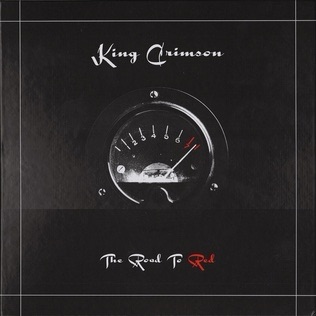
The Road To Red. King Crimson’s 1974 album Red was the last before band founder and guitarist Robert Fripp put the band on ice, presumably forever. This box takes us through the process that culminated in the album.
But unlike other box sets, we join the band on tour between late April and early July of ‘74. It takes 20(!) CDs, totaling 16 concerts, before we finally arrive at the album, which has been beautifully remixed by Fripp and Steven Wilson.
During this period, Crimson was in a state of transition. To know this band is to know that’s nothing new. While touring behind Larks Tongues in Aspic in ‘73 (another excellent box set, by the way), the band was a quintet. Before the ‘74 tour, percussionist Jamie Muir left the band. By the time Red was recorded, violinist David Cross had stepped away as well.
Red’s studio album cover features a photo of the band, a first and only occurrence. That cover featured a power trio of Fripp, John Wetton (bass and vocals), and Bill Bruford (drums). The cover for this box set, featuring a tachometer running at its top end, is appropriate. This tour featured a hi-octane band running roughshod over its audience. In a good way.
This box set is stuffed to the gills with 24 total discs (three are DVD or blu-ray), assorted photos and memorabilia, and a 40-page book featuring notes from Fripp, eyewitness accounts of the shows, and a fabulous essay from Sid Smith, who also wrote the definitive band history In the Court of King Crimson. It can be argued that Smith is second only to Fripp in knowledge of the band.
The sound quality is high, thanks to all but one disc being either a restored soundboard or multi-track recording. The final show is a bootleg recording from Central Park in New York City on July 1. Fret not: a chunk of that recording was released commercially as U.S.A., a fan favorite. The sound quality is solid.
It’ll take time to get through all the discs, but the journey is well worth it.
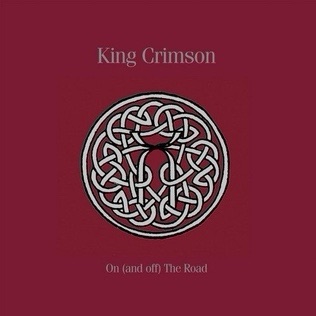
On (and off) The Road. This is the King Crimson era for me personally. The three albums the band released between 1981 and ‘84 served as my introduction to King Crimson. My musical world hasn’t been the same since. I often refer to this band’s first album, Discipline, as my musical Ground Zero. My mind was opened to new possibilities, leading me to eschew commercial (read popular) music for sounds more adventurous.
Fripp and Bruford were back from the ‘74 lineup, but now they were joined by Adrian Belew (guitar and vocals) and Tony Levin (bass and Chapman Stick), the first Americans to be part of the band. The result is music that flirted with New Wave, made the most of new technology like guitar synthesizers and electronic drums, featured interlocking guitar parts (this was Crimson’s first two-guitar lineup), and quirky lyrics only Belew could provide. It was unlike anything anyone had ever heard.+
This is the leanest of the Crimson boxes, with 11 CDs to document this era. There are also two DVDs, three DVD-As, and three blu-rays for 19 discs total. But there is also a boatload of memorabilia (including a reproduction of the program assembled for the Japanese leg of the Three of a Perfect Pair tour) and a book featuring Fripp’s diary entries and another excellent essay by Sid Smith. Simply put, a little goes a long way where this box is concerned, be it via studio or live recordings.
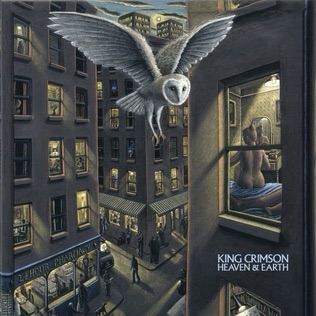
Heaven & Earth. It feels as though I hold King Crimson’s “Double Duo” lineup, active between 1998 and 2003, in higher regard than many fans I know, along with Fripp himself. Fripp, Belew, Trey Gunn (Warr Guitar) and Pat Mastelotto (drums) created what I’ve called “22nd Century King Crimson,” the most adventurous music of the band’s career. The Power to Believe, released in ‘03, is my favorite post eighties album behind Discipline.
The approach to this era’s albums is unique. Fripp assembled various incarnations of the mid-nineties “Double Trio” lineup (which included Levin and Bruford) for a series of recordings he dubbed “ProjeKcts.” These groups served as “research and development” toward future albums. It’s an interesting concept, but some would deem the results mixed.
The ConstruKction of Light, released in 2000, was described by Gunn as “the map, but not the treasure.” To be certain, it’s not the strongest Crimson effort, but there are good moments. The Power to Believe is indeed the treasure, featuring a band fully embracing electronics like beatboxes and samplers (mostly by Mastelotto) and flirting with an overall sound that bordered on metal.
The Heaven & Earth box brings everything under one roof. There are 24 discs, 18 of which are CDs. The box opens with a fresh mix (by Mastelotto) of the band’s first album, dubbed The ReconstruKction of Light. Pat’s original drum tracks, where he exclusively used Roland V-Drums, were lost. This turned out to be a blessing in disguise.
Pat re-recorded his parts, this time using an acoustic drum kit. The result is a much more aggressive sounding mix that elevates the original album’s overall quality.
The box also features live recordings from all four ProjeKcts on CD, along with the Double Duo’s tours. Discs 8-10 are a personal highlight, called Live ConstruKction 2000, in which David Singleton augmented recordings from a July gig at Shepherds Bush Empire in London with assorted improvisations from that tour, making for the ultimate live album.
One of the blu-rays contains every note played by The ProjeKcts, enough to keep any fan busy for quite some time. Another blu-ray features songs and improvs recorded by a group called Bootleg TV, who followed Crimson throughout Europe in 2000.
As always, there is more memorabilia and a book featuring another essay from Sid Smith, along with his diary entries from his efforts while touring with ProjeKct Four. All of it makes for great reading.
This box was a hefty investment, but it’s worth every penny.
FRANK ZAPPA
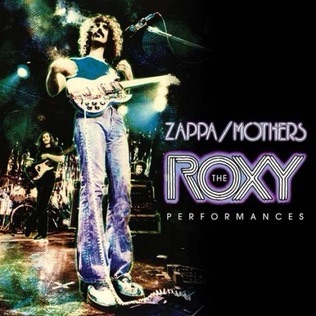
The Roxy Performances. Of all the box sets presented in this piece, Frank Zappa’s are without question the leanest where non-musical extras are concerned. But the music in these boxes is too good to ignore.
Zappa’s “Roxy” era band is my personal favorite. The lineup featured George Duke (keyboards and vocals), Napoleon Murphy Brock (saxophone and vocals), Ruth Underwood (percussion), and Chester Thompson (drums), among others. To call this band “skilled” is like calling the sun “bright.”
The Roxy Performances document the band’s 1973 residency at the West Hollywood venue. The seven-disc box is positively stuffed. That the only extra in the box is a booklet with essays is 100 percent irrelevant. Lose yourself in the music. That will be experience enough.
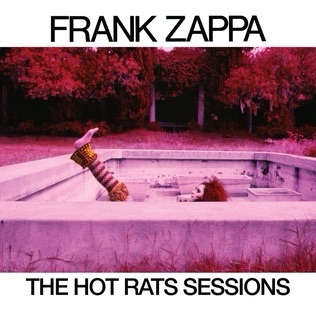
The Hot Rats Sessions. Another opportunity (or dare I say privilege) to take part in one of Frank Zappa’s finest works, 1969’s Hot Rats. We get to sit in the control room with Zappa as he runs supremely talented musicians through their paces until he gets exactly what he wants from them.
False starts are plentiful, jams are lengthy and produce marvelous musical fruit, with the best moments edited down and placed on the album proper. This is one of the more thoroughly documented creation processes I’ve ever heard.
When it comes to box sets, your mileage may vary. The question you should ask yourself is, “How much do I love this band/album?” What your answer should dictate your choice.
I would also offer a little advice: get and KEEP these boxes as quickly as possible, as they’re most definitely collectors items. One of my biggest regrets is having then selling Miles Davis’s The Complete On The Corner Sessions. I decided to download the discs to a hard drive and sell the physical copy. I believe the technical term for this action is “moronic.” Sure, you can stream it, but that’s not the same. And I can’t find a used copy for less than $230. I blame only myself.
Box sets aren’t cheap, but they’re worth it. If anything, you can show off the depth of knowledge you absorb to your friends!
Happy hunting.
^ I do feel for whomever has to curate my music collection after I die. To the point where I contacted friends who own a record store to see to it things are handled properly.
+ Belew and Levin have been celebrating the eighties Crimson by forming a band called Beat (the second album released by this lineup), which has been officially endorsed by Fripp, who has been replaced by Steve Vai. Danny Carey (best known for his work with Tool) takes Bruford’s place on drums. The group is spectacular! Anyone able to catch them on tour should make the best possible effort to go see them. If this isn’t possible, a CD/blu-ray release from their Los Angeles show is available.
#cirdecsongs
If you enjoyed this or any of my other writings, please leave a like. It really helps.
If you would like to have your music reviewed, contact me at cirdecsongs@gmail.com


All I can say is, you must have more money and more time than me. A lot more!
LikeLiked by 1 person
Let’s just say I’ve worked a LOT of overtime.
LikeLiked by 1 person