
By 1984, Miles Davis’s comeback from a five-year hiatus between ’75 and ’81 was complete. His tone returned, his new music was raw and aggressive, he continued to surround himself with young top-tier musicians, and fans were back onboard. The tentative tones of The Man With The Horn had been replaced by the full-fledged fury of Star People and the live shows that went around it. Things were plenty exciting, and I was all in on what I was hearing, even if it was a few years after the fact.
That’s when Miles started to do what he seemed to do best: he started to change musical direction. The raw, funky aggression behind tunes like “Speak,” “Fat Time,” and “Star On Cicely” were being replaced by a somewhat softer side where Miles started making room for Top 40 tunes like “Human Nature,” “Time After Time,” and “What’s Love Got To Do With It.” I’m hesitant to throw the “smooth jazz” tag on what Miles was doing, but it was very hard not to think that way.
I was onboard at first, but over the years, I’ve found myself hopping off the train when this started happening. It just wasn’t my cup of tea.^
In 1985, Miles ended his 30-year relationship with Columbia records and moved to Warner Brothers. There he found super-producer Tommy LiPuma and a new way of going about making recordings. Thanks to Marcus Miller (who had been part of Miles’s first comeback groups), Miles stopped taking full bands into the studio, opting instead to play along with pre-recorded tracks, where most of the instruments were played by Miller.
Tutu was the first album to come from this methodology. It was also the first Miles Davis album I ever consciously heard.+ Since I didn’t know any better, I was glad to go along with what was happening. Over time, though, I came to see the importance of jazz’s “live” nature.
While rock music thrives on consistency (fans often want their riffs identical to the album every time), jazz is much better when it relies on spontaneity. This means the musicians need to be in the same room, or at least within eyeshot of one another while playing in isolation booths. This is where the chemistry comes into play and the magic happens.
Miles may have been able to change what he played from one take to the next, but the rest of the “band” remained the same on the Miller tracks. This made some good songs like “Tutu” and “Splatch” sound stiff over time. Those songs would ultimately sound better when played onstage, where a band could take on the parts and give them a more organic feel, giving Miles more to work with.
Miles’s music, while pleasant enough, was losing its edge. The masses were onboard, to be certain. Jazz festivals worldwide no doubt sold TONS of tickets with Miles at the top of the marquee. But people like me, who thrived on music that pushed barriers, like the most aggressive fusion and progressive rock, were getting a little bored.
It didn’t help that there wasn’t a lot of Miles’s live material from this era being commercially released, and we were still several years from the Internet and YouTube to clue us in on what we were missing.
One might be able to find the occasional bootleg recording of a Miles Davis concert. It could be a recording made by a radio station when Miles played in their town, or it could be an unauthorized recording made by a fan at the venue the day of the show. Bootleg recordings tended to be quite expensive (I saw them at $40-75 in record stores in the late eighties) and you had absolutely NO idea what kind of audio quality you were going to get. More often than not, said quality was quite poor. Some of those records sounded just like the pockets they were recorded from.
Every once in a great while, we might get lucky and see Miles play a song like “Tutu” live on a cool television show like David Sanborn’s Night Music, but those moments were few and far between. Or at least that was the case in the United States. So, most of us had to make do with the studio recordings of Tutu and Amandla. They were adequate, but they lacked all the magic.
Mind you, this is NOT me trying to tell a musician what kind of music he should make and how he should go about making it. There are plenty of artists out there to whom I’ve given a pass for creating more commercial music or collaborating with certain artists in order to secure radio airtime. As far as I’m concerned, artists who’ve spent decades grinding away at their craft have earned the right to do whatever they want with their music and methodologies. If it doesn’t appeal to me (and it often doesn’t), I can just go back and listen to an older record. As far as I’m concerned, it’s a win/win for both of us.
I like what I like, and I wanted the edge. The Warner Brothers material wasn’t getting it done.
As it happened, Columbia Records had one more trick up its corporate sleeve. There was one more Miles Davis album for us to consume. The music was edgier, there were plenty of musicians involved (including a legend Miles recorded with in years past), there was an interesting concept behind the album, and Miles was able to make music in a way he hadn’t in nearly two decades. The music was a revelation. It was unlike anything Miles had done before. Anyone who heard the music couldn’t help but rave about it.
There was just one problem: it took nearly five years for the music to see the light of day.
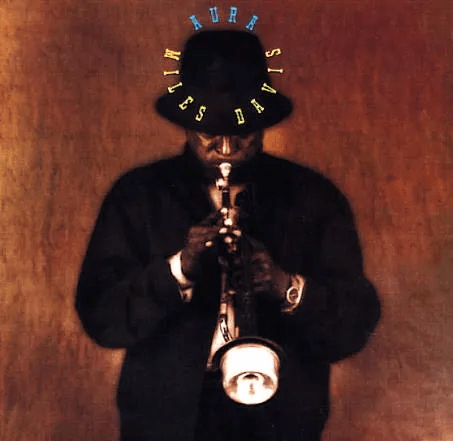
Between January 31 and February 4 of ’85, Miles recorded the tracks that would become Aura. The music was written by Danish composer and trumpeter Palle Mikkelborg. The composer used his jazz, classical, and avant-garde influences to create a concept album for Miles based around the way Mikkelborg felt about Miles’s presence, or “aura.” Like many others in the music world, Mikkelborg felt that any time Miles walked into a room, that room’s energy underwent a dramatic change. The way musicians thought and played would literally shift because they knew Miles was nearby.
Statements like that lead me to wonder who else in the music world wields or wielded that kind of power. The first person to pop to mind is Prince, who no doubt changed the energy in the room when he arrived. I would image Frank Zappa had the same kind of presence. I’m sure there are a (very) few others, but those were the first two people that came to my mind. But there was no doubt in my mind that Miles was one of those people, and I never got a chance to be anywhere near the man!
Mikkelborg’s approach to creating the tunes on this album is unique. Aura is a seven-song suite surrounding the seven letters in Miles Davis’s name. Each letter was then assigned a chromatic note leading to Mikkelborg createing an overall theme. From there, the letters were given a color, specifically the colors of a prism: yellow, orange, red, green, blue, indigo, and violet. These colors became the seven song titles.
There are actually two versions of this suite. The first was performed as part of a ceremony dedicated to Miles and his receipt of the Sonning Music Award, a Danish prize given for outstanding contributions to music. To put this award’s significance into perspective, the first artist to receive the award was Igor Stravinski.
Miles received his award in Copenhagen on December 14 of ’84. Aura was performed by the Danish Radio Big Band, a part of the Danish Radio Orchestra. Mikkelborg had only intended for Miles to play on “Violet,” but Miles ended up being deeply inspired by both the music and the band, who reminded him of the orchestras conducted by Gil Evans in the fifties and sixties that helped produce albums like Porgy and Bess and Sketches of Spain.
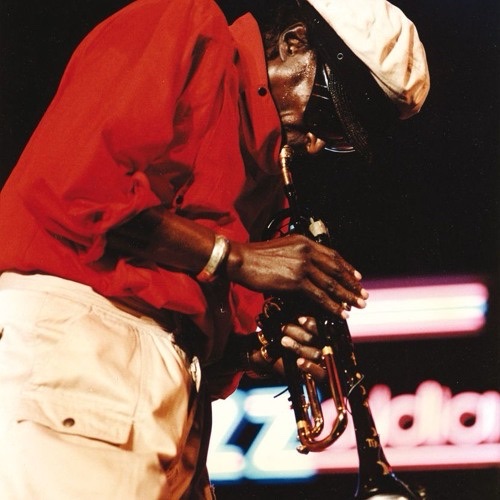
Miles always prided himself on being a musician who never “looked back” or repeated what he did musically years before. He once told keyboardist Keith Jarrett that he didn’t play ballads anymore “Because (Miles) loved playing ballads so much.” But this became one of a couple of exceptions when Miles was inspired to play along with a big band for the first time in a couple of decades.^^ Miles was so taken by Aura, he wanted to record the entire suite with Mekkelborg, whom Miles also tapped to produce the album.
Adjustments to the arrangements were made, the tracks were recorded by Miles and the band (including great cameo performances by guitarist John McLaughlin, who just happened to be in town with his own band), Miles re-recorded some tracks, Mikkelborg made a few more adjustments to the recordings (Miles recorded more than one solo for each track, sometimes as many as ten), the tracks were finalized by Mikkelborg, who sent them to Miles, and Miles was thrilled. Everyone was anticipating Aura‘s release later in ’85. Miles was eagerly chatting the album up, promising that it was music like nothing anyone ever heard.
And then Columbia shelved it.
Why this album initially didn’t see the light of day is subject to debate. The most popular theory seems based in spite, since it was well known that Miles was on his way to Warner Brothers, meaning Columbia’s interest in promoting the album waned in a huge way. But Columbia vice president George Butler blamed the label’s marketing department. The problem with making unique music, it would seem, is that no one was quite sure how to promote it. The music definitely sounded different than the smoother, more melodic sound Miles had been producing, and Mikkelborg theorized that Columbia wasn’t keen on promoting music heading in Aura‘s particular direction.++
Some four years later, Butler heard Aura while going through some of Miles’s old tapes. He loved what he heard, and demanded Columbia release it, saying it was some of Miles’s best playing in years. Nearly half a decade after Miles had embarked on his newest direction, the rest of us would be surprised by Columbia finally dropping Aura. It was well worth the wait.
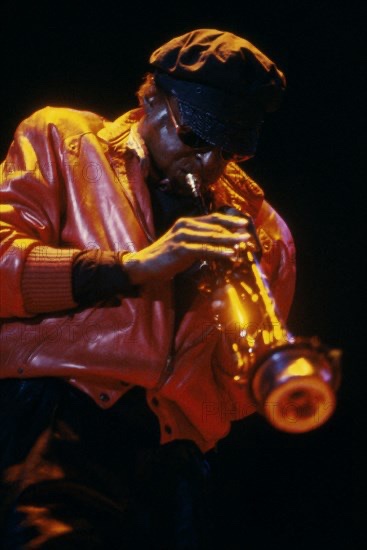
To be certain, Aura is a big band album. But it’s a big band era of its time, sounding very much of the mid-eighties, as opposed to what Miles and Gil Evans did in years past.
Time can do bad things to a record. But in this case, we can make an exception. Yes, the use of synthesizers and Simmons electronic drums dates the music. However, the music is unlike most anything else out there. Frank Zappa’s Jazz From Hell (released in ‘86) shares a little musical DNA, but Zappa relied almost exclusively on the Synclavier, while Mekkelborg still used acoustic instruments along with the electronics.
My personal favorites are “Orange,” (where McLaughlin puts in his best work), “Red,” and “Blue.” Why they’re my favorites is an argument better heard than described.
In the end, Aura is more than a record. It’s an experience. Trite as that may sound, some records are truly capable of doing such a thing. This is one of them. The music pushes and pulls the listener in and out of places not normally commercially explored in the eighties. Or since.
The actions of a record label helped to bury this album. Take time and unearth Aura. It’s time well spent.
^ I’d be lying if I said I was never into smooth jazz. In my earliest days of exploring jazz as a whole, I had my share of Spyro Gyra, David Sanborn, Bob James, and Earl Klugh records in my collection. God help me, I think even Kenny G snuck in for a hot minute. But as I got deeper into the “Young Lions” straight-ahead jazz movement that included Wynton and Branford Marsalis, Marcus Roberts, Terrence Blanchard, Roy Hargrove et al, smooth jazz went out the window, as I no longer had any use for it. Was/am I being snobbish? Yeah, I am. But I’m good with it.
+ While I’m certain my dad played a ton of Miles Davis while I was in the house (particularly on Sundays), I had absolutely no clue about it. I was doing what kids do best when their parents are playing music: I was doing my best to ignore it.
^^ The second was with Quincy Jones at the Montreux Jazz Festival in ’91 (shortly before Miles passed away), where Jones replaced Gil Evans and Miles performed songs from those albums with the assistance of Wallace Roney, who helped perform the more complicated parts because Miles was in ill health.
++ PERSONAL NOTE: The ignorance and idiocy of record labels (particularly the major ones) never ceases to amaze me. I’ve heard story after story about brilliant records by mega-talented artists being downplayed or shelved outright because some narrow-minded label exec didn’t “hear a single,” or thought the music was too sophisticated, or didn’t believe the artists’ audience wouldn’t be able to handle the change from the artist’s hit sound. Seriously … I truly wish these morons would get the hell out of the way and let the artist do what they do! Believe me, sooner or later, the audience will catch up. Assuming they were lagging behind to begin with!
#cirdecsongs
If you enjoyed this or any of my other content, please leave a like. It really helps.
If you would like to have your music reviewed, contact me at cirdecsongs@gmail.com


That was interesting, never delved into 1980s Miles. Listening now.
LikeLiked by 1 person