(Cover photo by Chuck Fishman)
Five years was enough.
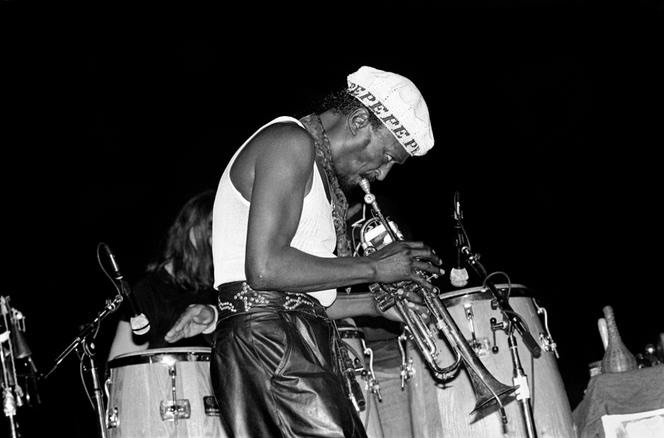
By 1975, Miles Davis was done with the music scene. He was dealing with physical health issues as well as a drug habit that wasn’t helping things. He needed a break, so he took one.
What happened during that break is a story unto itself. More than a few people have told more than a few dark stories. Actor/Director Don Cheadle touches on the period in his middling movie Miles Ahead. All I’m willing to say about this movie is “buyer beware.”
The dawn of the eighties saw Miles ready to make the scene once again. Once word got out, one question was asked again and again:
Will he go back to playing jazz?
The music Miles made in the seventies was both revolutionary and divisive. Electric instruments, rock-oriented arrangements, and funk ruled the day. The purists were apoplectic. Though younger fans (who Miles was targeting in the first place) were picking up what he was laying down.
So, what was going to happen now that Miles was coming back? Unsurprisingly, Miles didn’t do what was anticipated. It can, however, be seen as a variation on a theme. At least at first.
Miles’s eighties output started in one realm and ended up in another. At first, the funk of the seventies was augmented by the blues. But by the middle of the decade, Miles had shifted to a new record label, a new recording method and the embrace of pop music.
As a result, we once again found fans divided into at least three camps. Some fans embraced the decade. Some fans derided it. And some did a little of both. I count myself in the third category.
The easiest thing for me to do is divide Miles’s eighties output into two categories: The Columbia Era and the Warner Brothers Era. The former contained more adventurous music. It pushed boundaries, gave new depth to the blues, flirted with harder rock, and challenged fans to keep up. The latter was softer, more easily embraced by casual fans, and smacked of a quest to achieve maximum popularity. (All of this is, of course, one man’s opinion.)
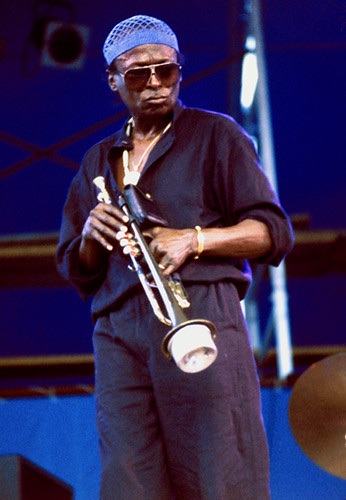
But there was still a matter to address before things took off: Miles needed to recover his lip.
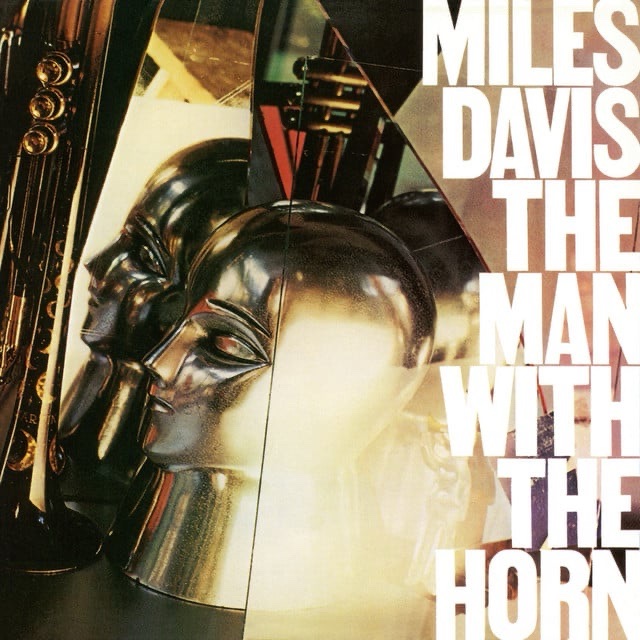
Miles’s first release of the new decade was called The Man With The Horn. The super-fan in me wanted to love the album, and did for a period. But soon, my more objective and critical side took over, and I heard something different.
Actually, I heard two things: first, Miles wasn’t playing very much. He was leaning heavily on the young players he recruited to be in his band. Secondly, he was doing that leaning because his trumpet sound was sparse and more than a little weak.
Miles himself confessed that it took him nearly three years to get back to his sound. I found myself nodding in agreement, even though it took me a while to get there. The Man With The Horn isn’t a bad album, per se. The album just isn’t … it.
Still, The Man With The Horn contains one of my all-time favorite Miles Davis moments, though it was not provided by Miles. The opening tune is called “Fat Time,” which features an absolutely blistering guitar solo from Mike Stern.^ The solo is even more meaningful because Stern was brought in at the last minute to play, as the sound Miles wanted wasn’t being captured by guitarist Barry Finnerty. Stern’s contribution led Miles to hire the guitarist as part of his live band, a position Stern held for two years.
The album also contains great playing by bassist Marcus Miller and saxophonist Bill Evans (not to be confused with the pianist who played on Kind of Blue in the late fifties). It was evident the two came to play, and they made the most of their opportunities. Drummer Al Foster, the only remaining member of Miles’s seventies bands, also does a rock solid job of holding down the grooves, giving the band fuel for their creative fire.
What didn’t work (for me) was the album’s schmaltzy title track, a blatant attempt to get Miles on R&B radio stations. I seem to remember hearing the tune when my parents had the radio on. I didn’t think much of the song then, and I think even less of it now. As far as I’m concerned, that song had nothing to do with the rest of the album. I can only assume this was a label decision meant to spur Miles’s comeback. (Again, this is one man’s opinion.) It was also a harbinger of things to come.
However, the tune I heard most on the radio was “Shout,” which had a bouncier, almost dance-like feel to it. For me, it’s okay. Certainly better than the other tune. It was definitely a different direction.
That very thing could also be the album’s biggest issue: the music’s style kept shifting, most likely because Miles had worked with two bands. One was based in Chicago, the other was from New York City. Critics were confounded, trying to figure out just what Miles was aiming for.
Regardless, Miles had returned. Which was more than enough to get the fans stirred up again.
Fortunately, things got better. Miles went on the road with Stern, Evans, and Foster. He also hired percussionist Mino Cinelu, who adds a nice dimension to the band’s sound. They played four-night residency at a Boston club called Kix. Portions of their efforts were released via We Want Miles in ‘82, which is a definite step forward from The Man With The Horn. The band’s chemistry is solid and the fans were really into it.
The tour also took them to Japan, and those shows were recorded, too. They weren’t released until ‘92 (the year after Miles died) as a Japanese exclusive release called Miles! Miles!Miles! However, the last tune on this release, “Jean-Pierre,” wound up on We Want Miles.
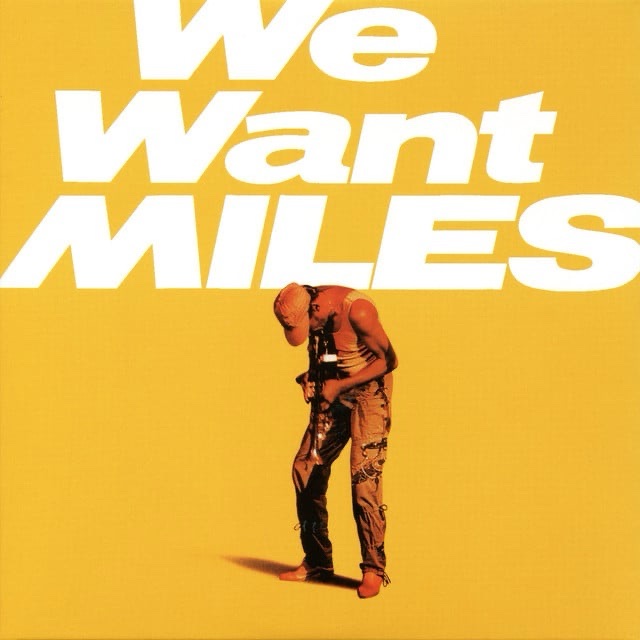
The band’s playing might have been great, but at times, Miles’s playing could be a detriment. The desire was there, but the tone that made Miles influential in years past wasn’t. Upon returning to the U.S., the band appeared on Saturday Night Live. Miles paced about the stage, offering bursts of effort here and there, but it was nothing to write home about. I remember being so excited to be able to see the performance, albeit years after the fact. I also remember how disappointed I was after seeing it.+
The thing is, Miles was still in relatively poor health. And again, the drugs remained an issue. He needed oxygen after some of his performances. People were often shocked by how frail he was. He was almost literally a shadow of himself.
Fortunately, the worm began to turn when Miles married actress Cicely Tyson in November of ‘81. She helped curb his drug abuse and improve his diet. Miles got stronger. His tone continued to improve. It all came together nicely the next time Miles went into the studio.
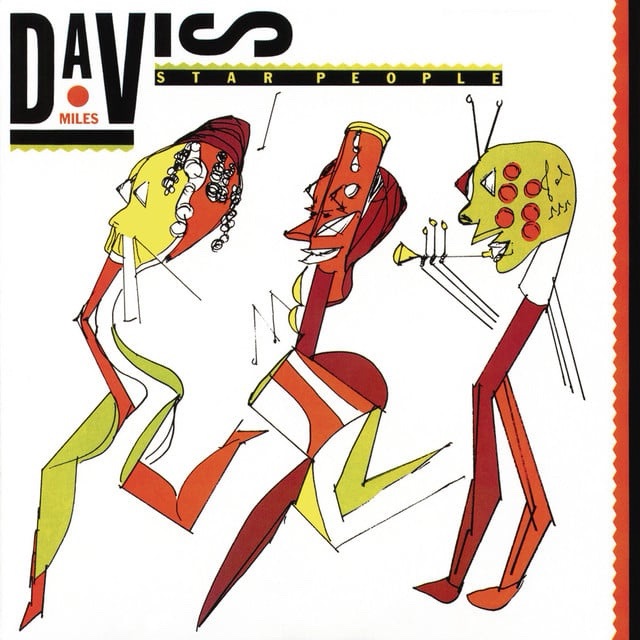
In my book, I recount the five-year saga that was me trying to attain a copy of Star People, which was released in ‘83. The song “Star on Cicely” was part of a box set called The Columbia Years, 1955-1985. It was some of the wildest, funkiest, and heaviest music I’d ever heard from a jazz musician. I figured it would be easy to get a copy of the album, since it had been released just three years before. I figured wrong. Star People was already out of print.
This was the eighties, so there were no online auctions or places like Discogs to find even a used copy. And Star People was nowhere to be found in the dozen or so record stores in three states I checked. It wasn’t until I was stationed in Japan that I found a CD copy in a record store called Wave, located in downtown Tokyo. I’ve protected that CD like it was made out of gold.^^
I may not have been happy with the wait to find Star People, but it was worth it! Miles had found his lip and was leading a crack band featuring a couple of new players. John Scofield shared guitar duties with Stern and Tom Barney took on some bass work for Miller. (Barney’s bass line on “Speak” is the stuff of legend.) Everyone is at the top of his game.
The title track, a 19-minute blues workout, is a particular highlight. It was as though Miles was sending a message, in which he probably said something to the effect of, “I’m really BACK, motherfuckers!” This would’ve been 100 percent accurate. Star People is without a doubt one of my all-time favorite Miles Davis albums.
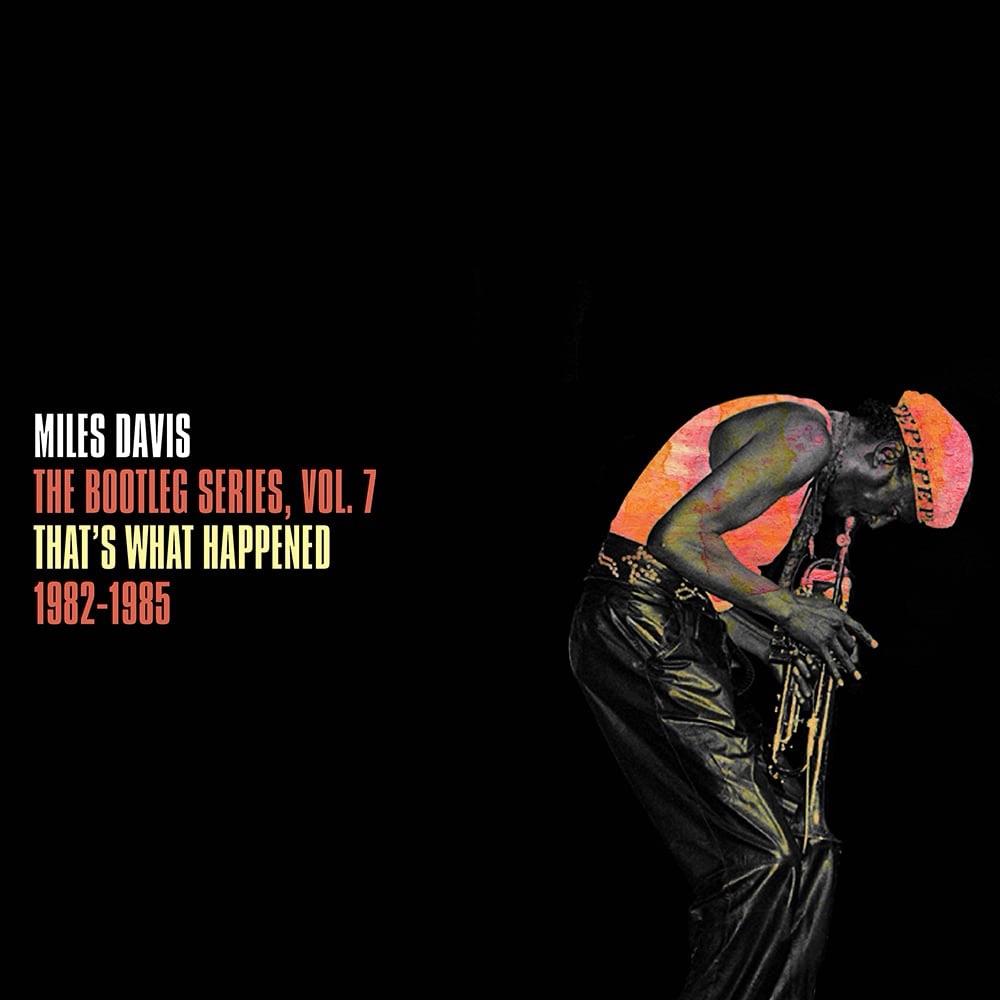
Lest someone think it was a fluke, Sony Legacy released the seventh volume of their Miles Bootleg series called That’s What Happened 1982-1985. The highlight of the three-CD set is the third disc, which is a live performance recorded in Montreal on July 7 of ‘83. It positively smokes. Miles is joined by Scofield, Foster, Evans, Cinelu, and new bassist Darryl Jones. This was the Miles fans had been waiting for. It was worth the wait.
Things began to change in 1984 with the release of Decoy. From where I sit, the edge was starting to come off of Miles’s music. The fire of Star People was steadily being extinguished. Miles also began to embrace Top 40 music like Michael Jackson’s “Human Nature” and Cyndi Lauper’s “Time After Time.” They were released on Miles’s ‘85 album You’re Under Arrest. I remember enjoying that album at first, but it has since reached what I call the point of diminishing returns. It almost never leaves my media shelf.
No doubt Miles was out to create new Standards, like jazz musicians did with pop tunes in the fifties and sixties. But this time, the tunes rang a little hollow. It just didn’t work for me, which was a view shared by more than a few fans.
The biggest change came in ‘85, when Miles left Columbia Records for Warner Brothers. With the new label came new methodology. Starting with Tutu, released in ‘86, Miles all but stopped taking a band into the studio, preferring to play along to pre-recorded tracks.
Marcus Miller returned to play most of the instruments and produce Tutu. As the first Miles album I ever heard, it generated interest in Miles and his music. But it will always take a back seat to his work with Columbia.
Complaints aside, the music Miles Davis made during the first half of the eighties more than sustains me and represents the decade just fine, thank you. It’s nice to know a musician can step away from music for half a decade, come back, and still have something to say.
^ The song itself is named after the less than kind nickname Miles gave to Mike Stern, who was considerably heavier than he is today. To his credit, Stern was takes the whole thing with a grain of salt and good humor.
+ I could swear the performance could be seen on YouTube for quite some time. However, I’m now unable to locate it.
^^ After Miles died in ‘91, Star People was re-issued. After spending five years looking for that damned album, you couldn’t swing a dead cat without hitting a copy from then on. I ultimately bought a copy on vinyl.
#cirdecsongs
If you enjoyed this or any of my other content, please leave a like. It really helps.
If you would like to have your music reviewed, contact me at cirdecsongs@gmail.com

