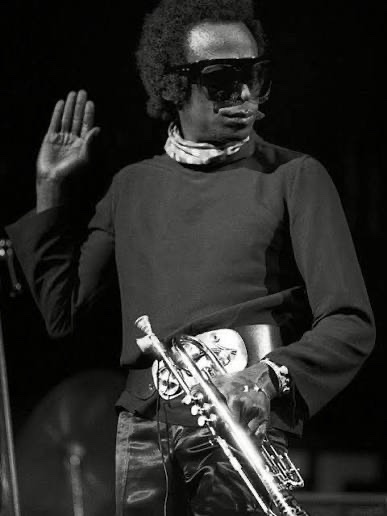
I had the same thought many no doubt had twenty or so years before.
I sat and I listened. My brain was thrown completely off-balance. I had but one question: “What the hell is Miles doing!?”
I was three or four years old in the early seventies when Miles Davis decided to push traditional (aka “straight ahead”) jazz aside for a new sound. A wild sound. An electric sound. It was the sound of …
of …
uhh …
well …
What the hell do I even CALL this?
I asked a few friends what they called Miles’s seventies output. I told them they only got ONE word to describe the music. I knew I would get a wide array of answers. My friends didn’t disappoint.
Some answers were fairly basic. Most weren’t. How did they describe the music in a single word?
“Jazz.”
“Fusion.”
“Transitional.”
“Shadowy.”
“Stanky.”
“Expansive.”
“Exploratory.”
“Unknown.”
“Eclectic.”
“Funkosmic.”
“Funkalectronicfusojazzyrocky.”
“Otherworldly.”
To me, it’s music from another dimension. That description brought me to my word: interdimensional.
One thing was certain: based on his new sound, the days of “All Blues” and “Someday My Prince Will Come” — Miles Davis staples for years — were OVER.
Like I said, I wasn’t even a kindergartner when Miles took on this new direction. I got to it about 20 years after the fact. Granted, I had already heard electric records like Tutu and You’re Under Arrest. But this music was not that. Not by a damn sight!
Miles fans were well aware of his incessant need to change musical direction. But up to the late sixties, his changes were relatively subtle, and always acoustic. “Cool” jazz gave way to hard-bop, which gave way to Modal, which morphed into post-bop, which was stretched as far as Miles believed he could take it.
Then this happened.
Things started gradually. Miles decided to augment his “Second Great Quintet” (featuring Wayne Shorter on saxophone, Herbie Hancock on piano, Ron Carter on bass, and Tony Williams on drums) with guitarist George Benson for a song called “Paraphernalia” on Miles’s Miles in the Sky album. That song cracked the door open.
In ‘69, Miles released In a Silent Way, the transitional album. British legend John McLaughlin played guitar and Hancock added an electric piano. Think of this as the entry foyer. From there, Miles was ready to take up residence in the main room.
He kicked that door right off its hinges.
Shortly after Woodstock in ‘69, Miles took a small boatload of musicians into the studio, and they started playing. They played, and producer Teo Macero edited. A bit here, a bit there … all brought together via patience and the use of a razor blade on the multi-track tapes. The end result was Bitches Brew, released in ‘70.
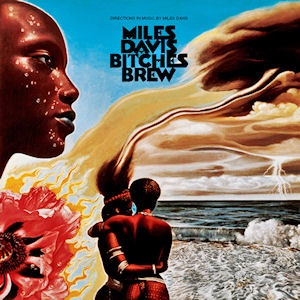
More than a few fans (mostly jazz purists completely opposed to the idea of electric instruments) didn’t know what to do.
I’m sure more than a few of them stared at their speakers, wondering like I did just what was going on. Many music critics lost their minds. They couldn’t rip the album fast or hard enough. Miles had “sold out.” The music was “shallow.” He was “pandering” to younger artists.
Miles didn’t give a damn.
He was on a different plane. As far as Miles was concerned, it was up to you to catch up and keep up. If you couldn’t hang, well, it sucks to be you! The horse was out of the barn and it wasn’t coming back.
By the way, Bitches Brew won a Grammy in ‘71 for “Best Large Jazz Ensemble Album.” Do what you will with that information.
I won’t lie … I struggled to get ahold of this album. I called it a “hard get” when I described it to friends. I would NEVER recommend Bitches Brew as a starting point for exploring Miles Davis. It’s too much information, and a lot of it won’t make sense.
Here’s another one-word description: abstract.
Miles was coming at the music from a few different directions, sometimes all at once. He had started grooving to the sounds of Jimi Hendrix, James Brown, and Sly Stone. Yes, he wanted to capture a younger audience. He shared concert bills with The Grateful Dead. His shows seemed to come from a more rock-driven standpoint. He wanted the sound of the streets and he knew straight-ahead jazz would never get him there. Record sales seemed to make it clear that jazz sound was dying.
Song titles became largely irrelevant, assuming Miles bothered to name the tunes at all. When he performed live, Miles and his band just went onstage and played. No announcements, no introductions, no nothing. When asked the title of his performance at the Isle of Wight Festival, Miles reportedly said, “Call it anything.”
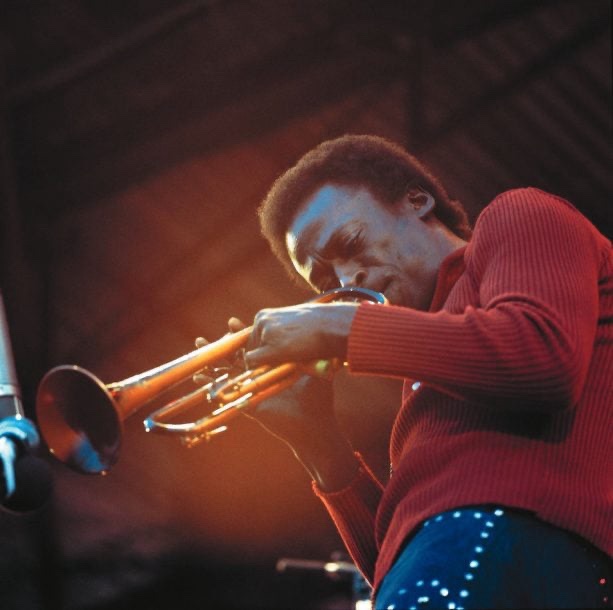
But like everything else, this new music evolved. Miles’s abstractions started to tighten up. What once seemed like musical meandering began to coalesce into genuine songs, at least when they began. Fans began to recognize theme statements that centered the band before they were allowed to take off.
The band would stretch out again, and Miles would bring them back with the theme from the next tune. “Directions” seemed to be one of the more common cues. Miles at Fillmore offers up prime examples.
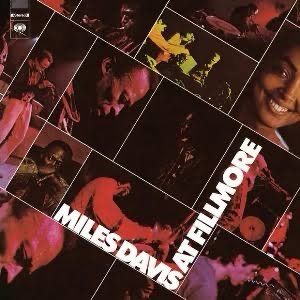
As always, Miles relied on young talent to get his music across. Herbie Hancock was replaced by Joe Zawinul, Chick Corea, and ultimately Keith Jarrett (though from time to time, more than one keyboard player was on the bandstand). Tony Williams gave way to Jack DeJohnette, who was replaced by Billy Cobham. Ron Carter was replaced by Dave Holland, who was more willing to play electric bass. Wayne Shorter remained until he gave way to Steve Grossman, but they were augmented by Bernie Maupin on bass clarinet. And others like John McLaughlin joined in as well.^
The music could still be fairly abstract until Miles created music for a documentary called A Tribute to Jack Johnson. Corea, Hancock, Maupin, McLaughlin, and DeJohnette were among those present. But there were also a couple of young players who were key to bringing in the next phase of this electric music.
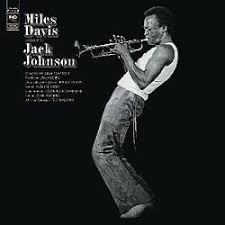
Sonny Sharrock joined McLaughlin on guitar. More importantly, Michael Henderson took his place as the bassist. Unlike everyone else, Henderson didn’t come from a jazz background. His chops came from Motown, enabling him to creat consistent, funky, and infectious grooves. Miles was over the moon. Henderson became the mainstay on bass until ‘75.
The next key element came in the form of drummer Al Foster, an absolute basher who also happened to be a human metronome. He and Henderson formed the rhythm section that propelled Miles through the rest of his active years in the seventies. Henderson and Foster had three simple jobs: come in, lock in, and stay in. Fills were minimal. Solos were almost nonexistent. Henderson and Foster were the pulse. The rest of the band revolved around them.
Speaking of which …
Miles continued the seventies transitions when he brought in Mtume to play percussion, Dave Liebman on soprano sax, and the dual threat of Pete Cosey and Reggie Lucas on guitars. Miles also took on keyboard duties himself, playing organ stabs where he felt they were needed.
Miles was also finding new ways to alter his trumpet’s tone. He already played with the traditional open bell (though he had a small microphone attached to it, as opposed to walking up to the mic stand in the traditional manner), and was legendary for his sound when using a mute. Then he added another dimension by running his trumpet through a wah-wah pedal, an effect used almost exclusively by guitarists.
A Jimi Hendrix influence? Most likely. But it worked! The altered sound poured from the speakers, wailing and crying over Henderson’s consistent lines and Mtume’s percussion fills. No other band was producing that sound.
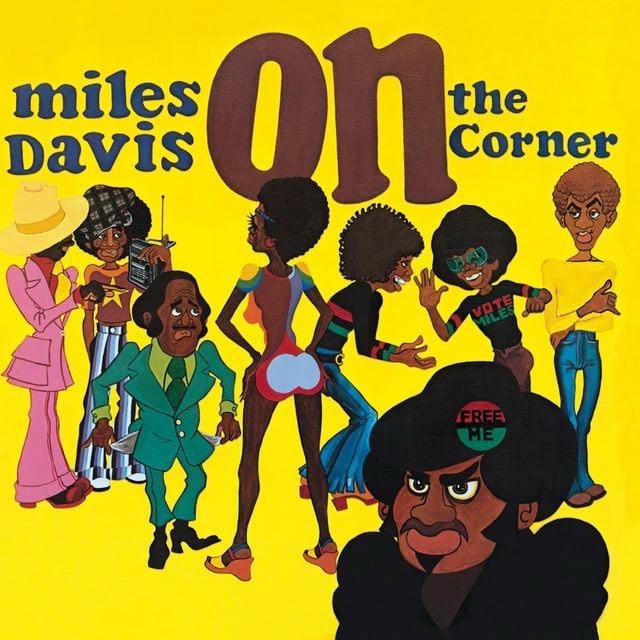
Miles unleashed his second most controversial album, On the Corner, in 1972. The album helped to usher funk fully into the proceedings, along with unusual instruments like sitar, with remarkable results. Like Bitches Brew, On the Corner remains highly divisive. But I’ve heard more than a couple of bands take on “Black Satin,” a funk exercise nearly impossible not to try and jam over should you have an instrument on hand. Guitarist Jimmy Herring and his band The Invisible Whip absolutely tear “Black Satin” to shreds when they play it in concert!
As the seventies moved along, the grooves created by Miles and company may have sounded consistent, but the melodies and soundscapes seemed to get continuously darker. And funkier. The band was being propelled by those infectious grooves, which seemed like divine inspiration. But the elephant in the room must also be addressed. Dave Liebman admitted that some of the music was fueled by cocaine. How much? That’s something only the band knows for sure. One thing is certain: the music’s frenetic nature makes Liebman’s statement easy to believe.
Some critics were making cryptic statements about the music they were hearing. One referred to the sound as coming from “the world’s first fully functional improvisational acid funk band.” Vivid, but logical.
Miles created interesting works in the studio resulting in albums like Big Fun and Get Up With It. For my money, Miles’s best work was recorded during concerts. On February 1 of ‘75, Miles played two sets in Osaka, Japan. The band played both a matinee set and a second set that evening. Both concerts were recorded. Each became an album.
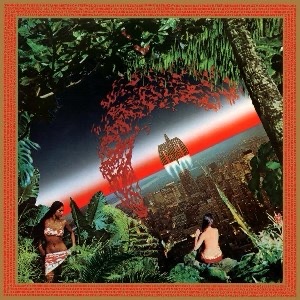
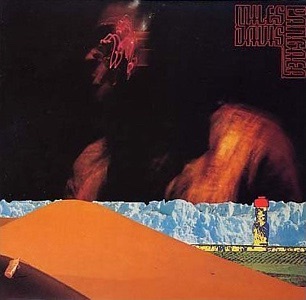
Agharta is the matinee set and Pangaea came from the evening performance. By the way, both releases are double albums running more than 90 minutes apiece. That is what one might call a highly creative outburst, given the music’s improvisational nature.
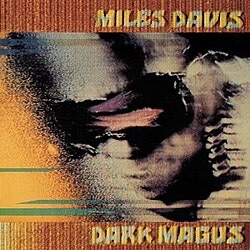
Still, I think my favorite album from this period was recorded almost a year before at Carnegie Hall in New York City. The band’s work of March 30, 1974 was released as Dark Magus, which was yet another double album release. These bands were nothing if not prolific.
The music is quite dark, as titled. There’s something sinister taking place onstage that evening. Miles and company invited the sound in and ran with it. They reached into every nook and cranny to push the music forward. Then they would pull back to let that sound fall away before launching in a different direction. The band might’ve known where 25 percent of the music was going before they took the stage. The rest is improvisational history. And when the sound was gone, it was gone.
Throughout the early seventies, Miles had been dealing with health problems (particularly in his hips) throughout the seventies. To say nothing of that nasty drug habit. By ‘75, he’d had enough. Miles broke up the band and decided to take a break. One of the world’s most popular musicians was done. He put his trumpet down and went into seclusion. Many figured it was for good.
Had that been the case, Miles’s legacy was secure. He took jazz (if one insisted on calling it that) to places unimaginable less than a decade before. The music he made in the seventies remains ahead of its time half a century after it was created.
Bands like Harriet Tubman and Kneebody show signs of using Miles’s seventies period as a jumping off point, even if they don’t stretch quite as far. Wadada Leo Smith (trumpet) and Henry Kaiser (guitar) did a great job paying homage to the music over two albums, calling their project Yo Miles. There are other tribute projects to be found. Most capture the spirit of Miles’s music, but not always the intensity. But that was a tall ask to begin with.
Miles’s seventies period will no doubt be dissected and argued over for years to come. Everyone will insist their argument is the correct one. And they will all be right. And wrong. It just keeps people talking. That seems to be exactly what this music was designed to do.
As it turns out, The Man wasn’t quite finished after all. Miles decided to come back on the scene six years later, in 1981. But that’s another story.
^ Those musicians didn’t exactly fade into obscurity. Many went on to form their own legendary fusion bands. Tony Williams formed Lifetime. Joe Zawinul and Wayne Shorter created Weather Report. Herbie Hancock formed The Headhunters. Chick Corea created Return to Forever, and John McLaughlin birthed the Mahavishnu Orchestra. Each band is a must in any fusion collection. Other artists like Billy Cobham and Keith Jarrett also went on to highly successful solo careers.
#cirdecsongs
If you enjoyed this or any of my other content, please leave a like. It really helps.
If you would like to have your music reviewed, contact me at cirdecsongs@gmail.com
 CirdecSongs
Did anyone else have such an eclectic career? Maybe The Beatles moving from I Wanna Hold Your Hand to I Am the Walrus/Revolution 9/I Want You (She’s So Heavy)? Bowie going from The Laughing Gnome to Black Star? Either way, I think Miles was the best musician of the twentieth century, bar none, in ANY genre.
LikeLiked by 1 person
I would throw Frank Zappa into that group as well. All had something to say and more than one way to say it. It always makes for compelling listening.
LikeLiked by 1 person
Thank you! I am really enjoying these Miles@100 articles! Always lots to learn, think about and discuss!😎😎😎
LikeLiked by 1 person
Thanks for checking them out. Please tell a friend or ten. 😁
LikeLike