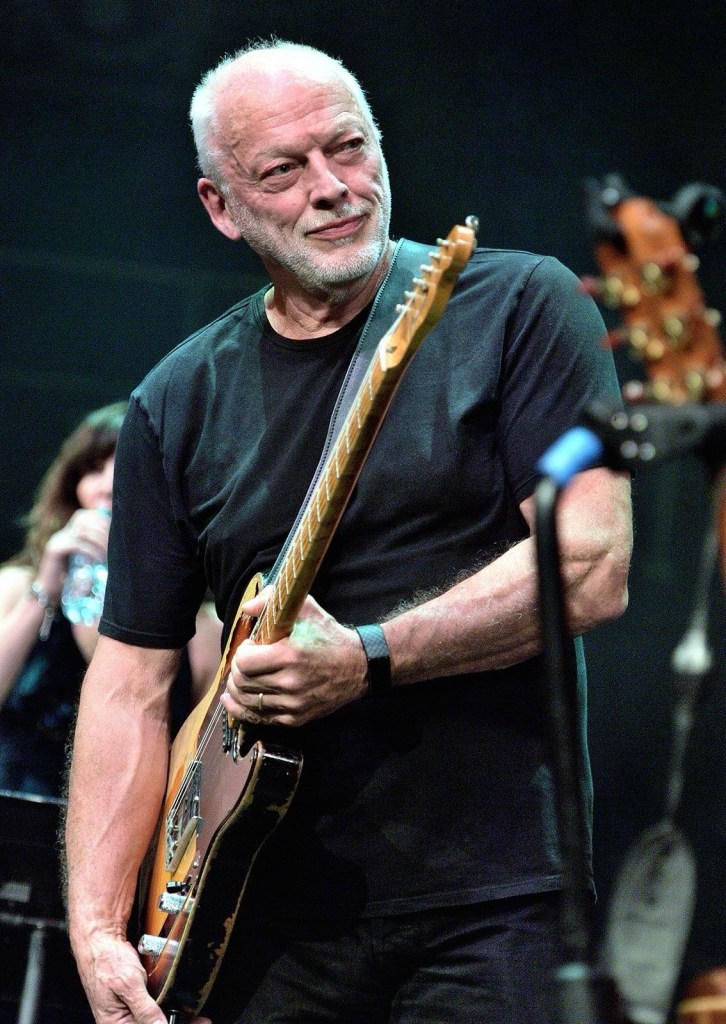
I’ve never seen myself as anything more than an adequate guitar player. I don’t practice enough. When I do, I play the same things. So, I’ll become really good at playing that, but not much else.
That isn’t enough. Now that I’m really starting to lose myself in playing, I need to take a deeper dive into what’s possible and who I want to become.
I’ve loved any number of guitar players over the years. My current laundry list still runs pretty deep. But in the end, my primary influences come down to four players.
Jimi Hendrix is the inspiration. He just makes you want to play, and leave it all on the stage while you do it. Jeff Beck is all about expression. What that man could do with his hands absolutely boggles the mind. Beck could project any emotion he wanted from that fretboard. Adrian Belew is for innovation. He lives to make his guitar and effects pedals do things they were never meant to do. When I aim to make weird noises, I think of Adrian.
But when it comes to solos, I am all about David Gilmour. Pink Floyd was an incredible band, and Gilmour is a big reason why.
During my first Guitar Renaissance (c. 1997 to 2007), my world was dominated by shredders. Steve Vai, Buckethead, John Petrucci, Robert Fripp, and others ruled the day. Nothing impressed me more than being able to play quickly and accurately.
Since coming back to guitar in 2022, I couldn’t care less about shredding.
Oh, I still appreciate those players and others like them. I just have zero desire to walk that path. Perhaps that’s what aging does to you.
When it comes to soloing, I want to play like David Gilmour. Pink Floyd’s music may be fifty years old in some cases. But the lessons Gilmour is teaching me will never become antiquated. The primary lesson can be summed up in three words:
LESS. Is. More.
Gilmour’s playing is beautifully paced. There is no rush. Every note is very deliberate and serves a specific purpose. He might clump a couple of quick notes together, but he won’t do it for more than a bar or two. And those moments are rare.
He’s bluesy and emotional. His tone is HUGE. Over the past few days, I’ve been programming my guitar processor to emulate the effects rigs of many of my favorite guitarists.^ David Gilmour’s setup is deceptively simple in many ways. Make sure your amplifier is set up loud and clean to give your notes a chance to ring out. Keep your guitar’s volume at around 60 percent so you have room to turn up for solos. That’s it! There are the occasional effects for color and signal boost, but the vast majority of the magic is in your hands, plus the willingness to let one note do the work of five. Slow and steady definitely wins this race!
Gilmour’s solos are the stuff of legend, particularly during Pink Floyd’s Pulse concert from 1994, where he simply let it all hang out! But there are plenty of gigs to choose from. My favorite solos come from tunes like “Sorrow,” “On the Turning Away,” and of course “Comfortably Numb.” Any one of these solos (among many others) is a Master class in instrumental lyricism and economy of motion.
So, I have my teacher.
Let’s hope he can develop a good student. Without saying much.
#cirdecsongs
If you would like to have your music featured reviewed, contact me at cirdecsongs@gmail.com


I know what you mean about every time you play, you play the same ol’ stuff – I do that and am tired of it. I recently started back with guitar lessons, so it would give me some structure and direction on what to work on and practice. It motivates me to practice because I know I’m going to go back to that guy in a week, and I’ll want him to hear progress. You probably are an experienced enough player that you don’t need lessons, but the focus on the artists you admire and playing your favorite solos probably is your motivation, and I get it.
LikeLike