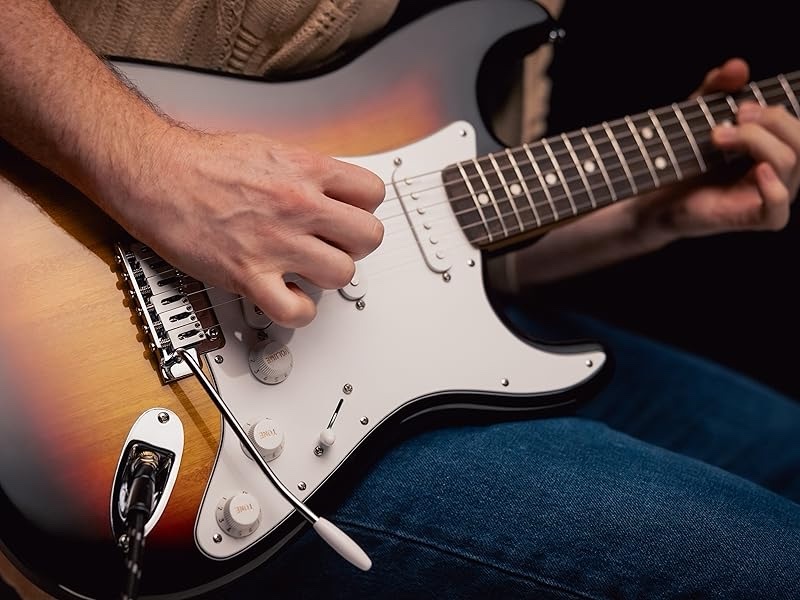
There are a lot of tough jobs out there. Police officers, fire fighters, teachers, nurses, electrical wire workers … all of them and more have it rough as they seek to make a living.
But these days, one of the toughest jobs around just might be working as the public relations director at Fender Guitars.
In March of 2026, a Regional court in Düsseldorf, Germany ruled that Fender’s Stratocaster body design was a “copyrighted work of applied art.” As such, guitars with bodies styled like the Stratocaster not made by Fender could be subject to lawsuits throughout Europe and perhaps even the United States.
In May, emboldened by this decision, Fender began issuing “cease and desist” letters to guitar manufacturers worldwide. Anyone manufacturing guitars with a Stratocaster-styled (called “S-shaped”) body is to stop production immediately. Any existing inventory in the EU is to be recalled. Once this is done, the guitars and any related body parts are to be destroyed.
In a nutshell, Fender was declaring other guitars fakes and wants them gone.
The guitar world went berserk.
Fender may have been expected some form of fallout, but chances are it is nothing like what they’re actually getting. Video after video is appearing on YouTube, including one from one of music’s elder statesman, the highly popular Rick Beato, who blasted the order without mercy. Music fans in general, and musicians in particular, are known to hang on Beato’s every word. If what he says is gospel, Fender has a serious problem.
The list of legends who played Strats seems nearly endless. Jimi Hendrix, Buddy Guy, Eric Clapton, Eric Johnson, Stevie Ray Vaughan … and on and on and on. Their skills and influence no doubt sent more than a few amateur players to the guitar shop with dreams of Strats dancing in their heads. I myself was influenced by Adrian Belew, who primarily played a Strat for years.

The issue is going viral in the worst way for Fender. Manufacturer after manufacturer is beside itself, not just because of the order, but because the order came into existence more than seventy years after the Strat came on the market! What took so long? Why is this an issue now?
Nearly every major guitar manufacturer — and more than a few smaller, boutique guitar-makers — makes a guitar shaped like a Strat. One popular theory is that Fender is, in a roundabout way, taking aim at Paul Reed Smith Guitars, specifically its immensely popular Silver Sky model, which is currently endorsed and played by John Mayer. PRS designed the guitar for Mayer. Prior to playing the PRS, Mayer was best known for playing — you guessed it — a Fender Strat.

Mark Knopfler (best known as the leader of Dire Straits) plays a Pensa-Suhr guitar with a very familiar-looking body design. Knopfler started playing this guitar after spending years playing — here we go again — a Fender Strat.

The Strat’s “double horn” is immensely popular in the guitar world, even if the body is not precisely duplicated. Steve Vai plays a custom designed Ibanez Jem whose body style has familiar origins.

I am purely a hobbyist, but my Number One guitar is a 1988 Fender Stratocaster, which I’ve had modified to suit my needs. I just love it to death. But I also love and need different tone colors my Strat can’t provide. I wanted a guitar I could de-tune and leave in settings like “open-C” for metal tunes. From a tone standpoint, my Strat is not designed for this. So, I found and purchased a Schecter C6 Deluxe. As it happens, the Schecter has a body style I’m very comfortable with.
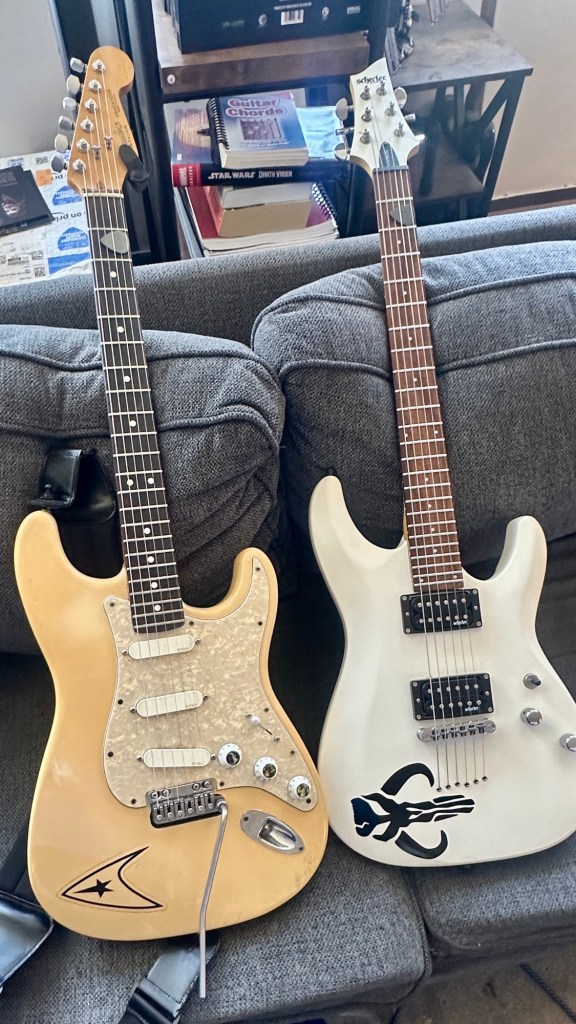
There is another popular opinion out there that comes down to a matter of quality. More and more people seem to be saying that Fender guitars aren’t what they used to be. They’re poorly made. The necks are awful. The guitar won’t stay in tune, and on and on. Guitarists are looking elsewhere to find what they need from a Strat-shaped guitar without actually buying a Strat.^
Beato is one of many YouTubers to lean into this thought process. He had to have his Strat modified in order to make it playable. That’s bad. What’s worse is statements like this are starting to become the rule rather than the exception. Fender’s back is now squarely against the wall. It sounds like Fender’s time and expense should be put more toward quality control and less toward legal action.
Since the fallout went viral, Fender has taken a couple of steps back from its original stance. At least, that’s what it looks like. “Fender fully supports innovation and competition across the guitar industry, including such guitars with two horns and/or double cutaways,” they said in an official statement. “Fender’s goal is simply to protect one of the company’s most iconic and recognizable designs while continuing to support a vibrant and innovative guitar industry.” The statement feels just vague enough to let some manufacturers to feel like they’re safe. But are they? No one is completely sure.
One way or another, just about every guitar manufacturer will be affected by this court decision. What happens from here is anyone’s guess.
Get your popcorn ready and stay tuned.
^ Personally, I think my guitar is from a better era. I know my previous Number One Strat — a ‘96 — always felt great both in my hands and the hands of friends taking it for a test drive. More than once I heard statements like, “This is a really good guitar!”
#cirdecsongs
If you would like to have your music reviewed, contact me at cirdecsongs@gmail.com

