Part of a special series recognizing my 25 favorite musical people, places, events, and things from the last 25 years.
I confess to having a touch (and by that I mean a TON) of musical OCD. If I find an artist I really like, chances are I’ll want to hear nearly every note that artist or band has ever played. I guess that’s my form of stalking. except the person doesn’t matter nearly as much as the music.
How many artists and bands have I been introduced to in the last quarter century? Certainly more than I can count. Rare has been the day when I find myself saying, “Oh, I want nothing to do with that.”
I can find good in just about any kind of music. It can be as big as a complex rhythmic pattern in an epic progressive rock song or as small as a witty turn of phrase in a hip-hop track.
The good stuff — the really good stuff — sticks to my musical ribs. The music stays in my head. It plays endlessly on a loop. I can’t wait to play the record again. I’m always talking them up to my friends. That’s the music I’ll always cherish. And it has happened more than a few times.
I got to thinking about the artists and bands that truly reached me since the turn of the century. I probably should’ve made my way to high ground before allowing that dam to burst. Thoughts flooded all over me. Still … it’s a great problem to have.
So, who qualifies for such a list? How do I make such a determination? I had no idea at first. In the end, it all comes down to instinct and the speed of mental recall. Whom do I think of first?
There’s no other criteria for my picks. I just know when it happens. I thought about things that took place, stared at my media shelves and download lists, and thought about whatever else may have popped into my head.
Here’s where I landed.
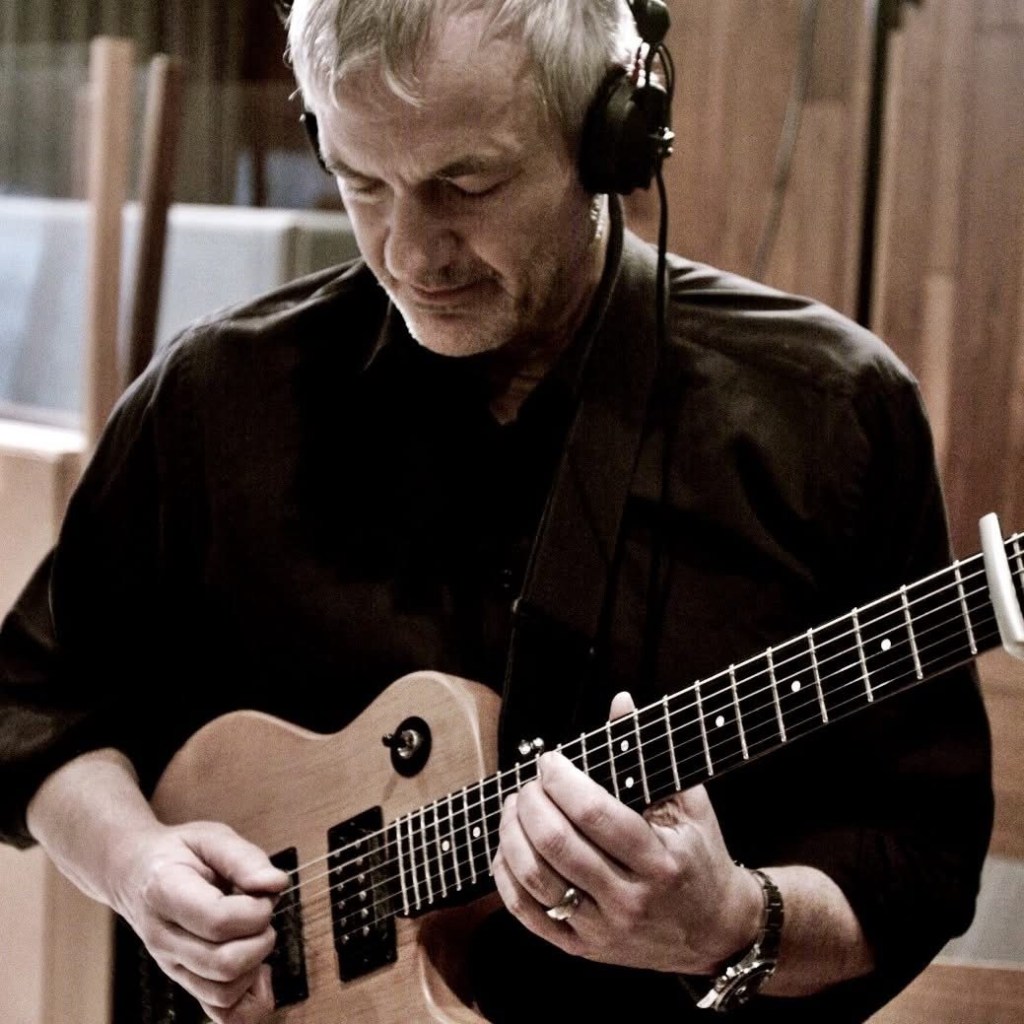
STEPHAN THELEN. It’s ironic that someone as math-phobic as I am is so obsessed with music built around mathematical formulas, but here we are. And it comes courtesy of Stephan Thelen. The Swiss guitarist (who also happens to be a mathematics teacher) uses remarkable formulas to make fascinating music.
It all started when I heard Stephan and his band, Sonar, on an album called Black Light. Thelen and his co-guitarist Bernhard Wagner have their guitars tuned in tri-tones (musical intervals spanning three whole tones or six semi-tones). Using this strategy, the two guitarists created intricate, interlocking riffs in order to propel their music forward.
I was instantly reminded of the eighties rendition of King Crimson, one of my all-time favorite bands. While Thelen cites Crimson as an influence, he told me his inspiration came from the mid-seventies lineup of that band. Go figure. Regardless, Sonar was taking their formula to an entirely new level, and I was loving it! I played Black Light more times than I care to admit.
In 2019, Thelen released a solo album called Fractal Guitar. Once again, his formula leveled up. This time, the music came to life with help from fellow visionaries David Torn, Markus Reuter, Matt Tate, and others. The compositions on this effort had more intricate arrangements and more musical “space.” And this stuff was dark. But that just made it all the more appealing to me. This is truly innovative music.
Thelen has since created tons of material in the Fractal family. And I’m there for every note.
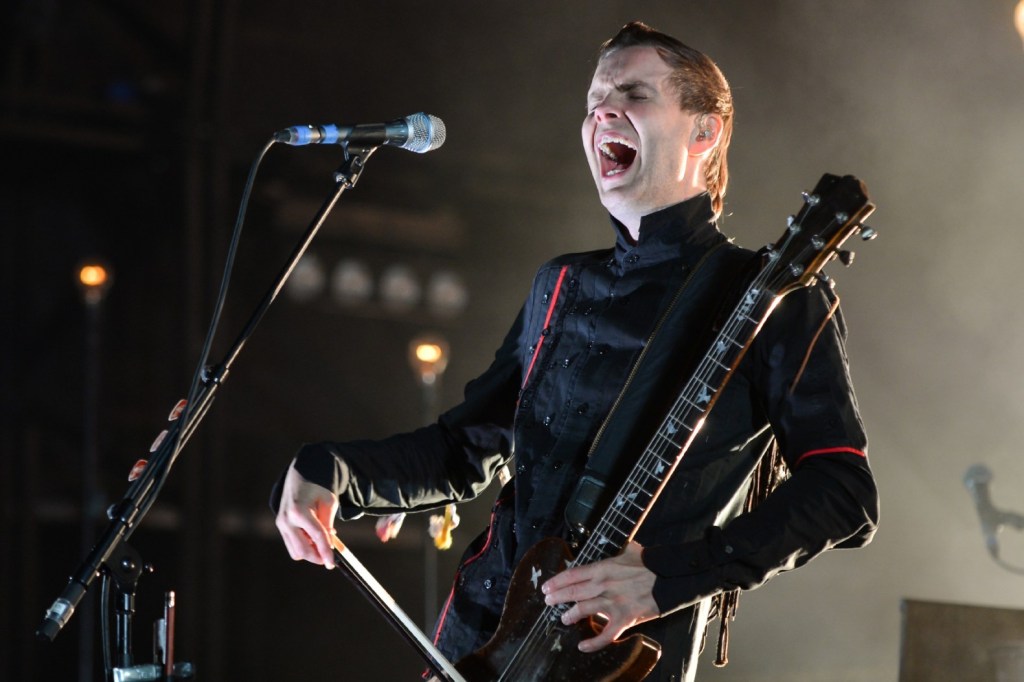
SIGUR RÓS. Tortoise might have been the band that brought me to post-rock, but Icelandic band Sigur Rós kept me there. Their music is the living embodiment of the word “ethereal.” I truly is otherworldly.
The band’s songs are deeply emotional. Lear vocalist Jonsi Brugisson, he of the bowed guitar, sings in a language that is neither Icelandic nor English. He actually came to call it “Hopelandic,” leaving the lyrical interpretation to the listener rather than drive the point home itself. This level of freedom is rare, particularly in this day and age, when musical interpretation can lead to less than positive places. But Jonsi trusts us, and that trust has been rewarded.
More often than not, Sigur Rós’s music is more soundscape than direct melody, which is where the emotion can be found. Listeners can focus solely on the band, or let themselves be taken away by self-imposed imagery. It’s a wonderful way to fly.
You have to love a band willing to release an untitled album called simply ( ), a true exercise in audience trust. While the band did ultimately went back and assigned titles to the compositions (not that it made any difference), the emotional impact had already been made. “Untitled #8 (Popplagiǒ)” is my all-time favorite Sigur Rós tune. It pulls things out of me I never knew existed. Isn’t that the best thing music can do?
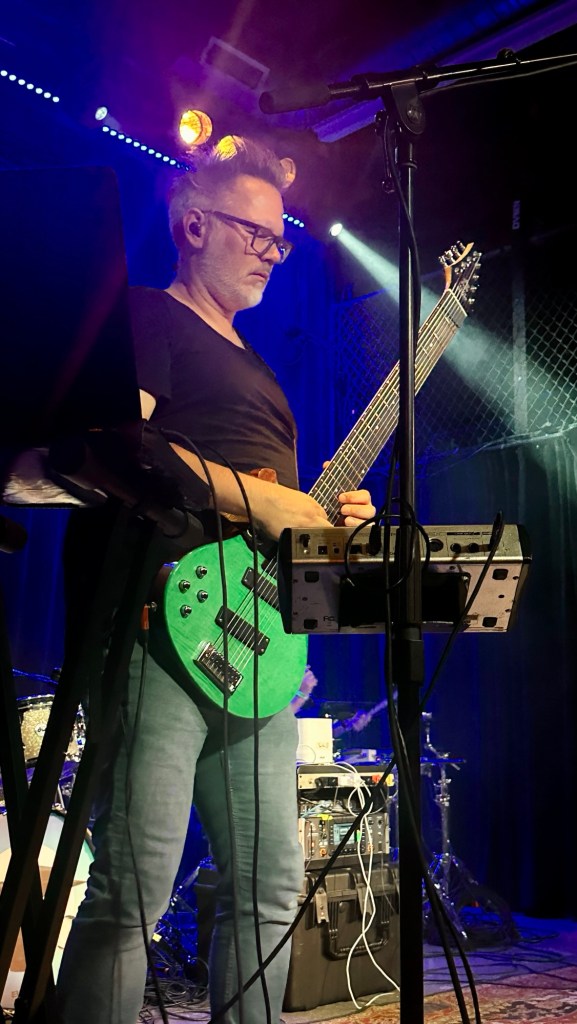
MARKUS REUTER. I’ve always been fascinated by touch guitars, despite being well aware that I don’t have the patience or skill level to learn to play one. Imagine being able to tap or strum anywhere from eight to 12 strings that give you the ability to play guitar and bass at the same time! You’ve got to be some kind of creative and plenty coordinated to accomplish such a feat.
I first saw this done by Tony Levin on the Chapman Stick. Then it was Trey Gunn doing it with a Warr Guitar. Enter Markus Reuter, who not only possesses the skill to handle such an instrument, he up and invented his own version with the Touch Guitar U8! His musicality seems beyond any limits!
I saw Reuter live for the first time with Stick Men, a trio made up of himself, Levin (playing Stick, of course), and drummer Pat Mastelotto. Their music is intricate and hard-charging to the point of brutality at times, but always deeply musical. They’ve even taken on and conquered a couple of King Crimson classics, a band Levin and Mastelotto have on their resumes.
Reuter also takes his U8 into soundscape territory, creating layered walls of sound built to stand on their own or offer up opportunities from others to improvise through and/or around them. He also has that sense of musical darkness I’m magnetically drawn to. I’ve also been drawn to the look of brutal intensity he displays while playing. Sometimes, he looks downright angry. But he’s not. In fact, he’s usually having the time of his life.
Reuter is also one helluva nice guy. Which never hurts.
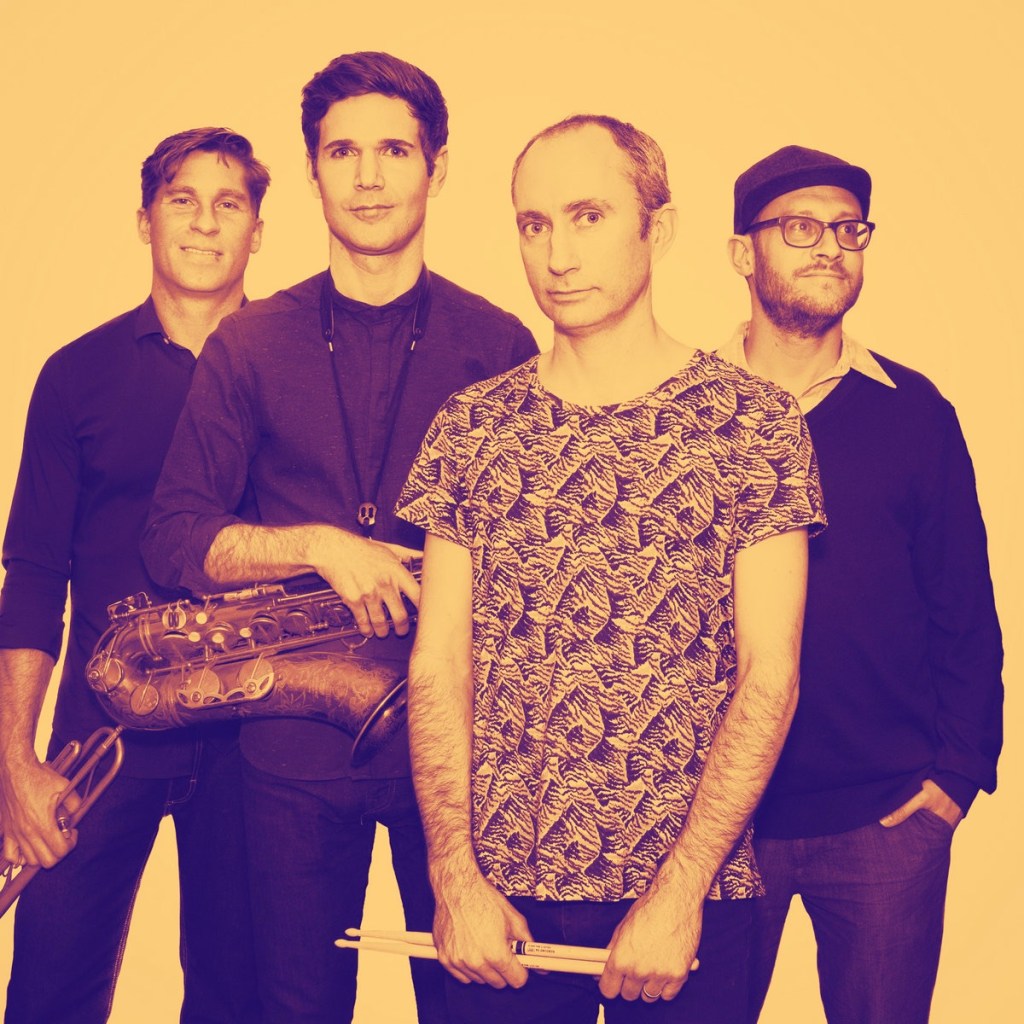
KNEEBODY. My quest for what I call 21st Century Jazz has led me to some interesting places. As much as I appreciate the “Golden Age” (to me) of jazz from the sixties and the “Young Lions” movement of the eighties (which was basically, but beautifully, the sixties with younger players), I wanted to hear the form embrace new directions. I wanted the sound to, as one of my favorite television shows would say, boldly go where no one has gone before.
Enter Kneebody, a band playing jazz, only not. This wasn’t the first time I ever heard trumpets and saxophones being run through effects pedals, but it was among the most interesting.
This was jazz for t-shirts and jeans instead of the sharpest suits (which a friend of mine calls “Armani Jazz,” a term I adore). The music was informal and innovative. You had to get a little dirty to go on a musical adventure with Kneebody. The adventure wasn’t always clean, but it was a lot of fun! And it always led somewhere interesting.
My first Kneebody experience came in 2017 via an album called Anti-Hero. As the notes poured out of my speakers, I became the puppy from the RCA Records label, tilting my head back and forth as I tried to figure out just what it was I was hearing. This was a good thing! I was transfixed. Seeing them live a couple of months later (informally dressed of course, unlike when I saw Branford Marsalis) solidified things. Here was a band I could sink my teeth into. I’ve been doing so ever since.
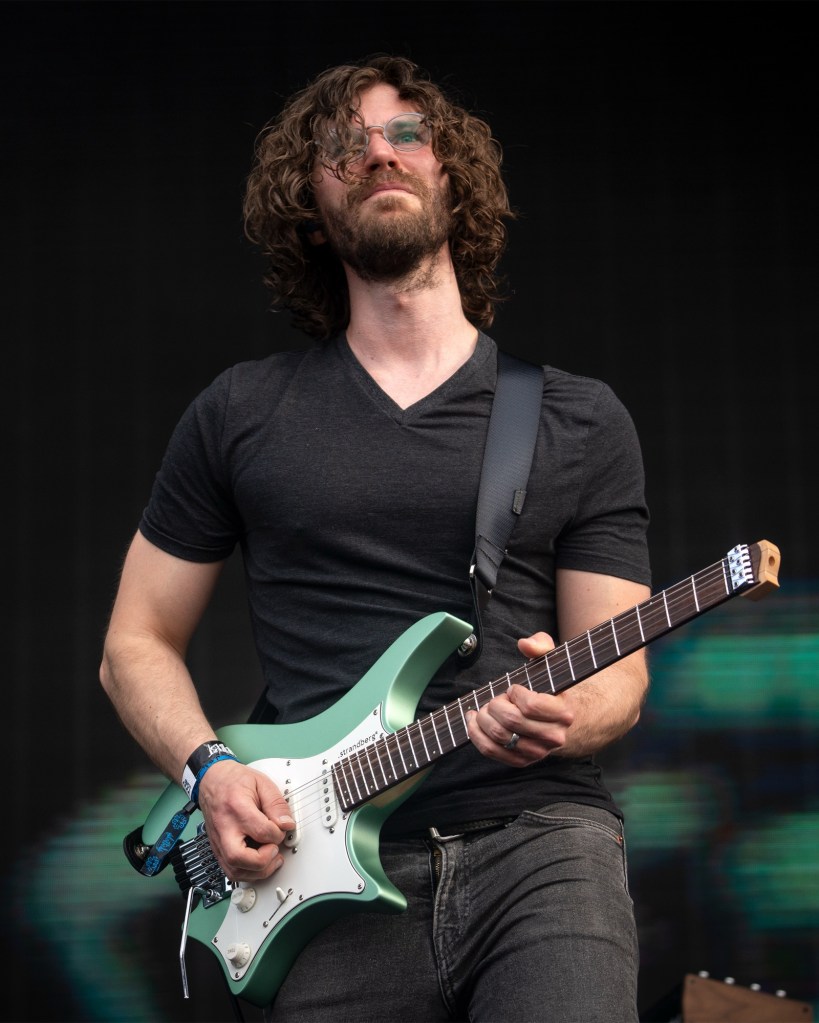
RANDY MCSTINE. There’s something remarkably unassuming about Randy McStine. He’s that “plus-one” who shows up at the party with the friend you already know. Then he proves to be just as — if not more — interesting than the friend you actually wanted to see.
McStine is low-key and humble. Nothing about him screams arrogant or self-important. So, when you learn just how incredibly talented he is, it’s the cake on top of another cake. “I already thought this guy was cool but damn!”
I’ve heard McStine in a variety of contexts. Be it as a solo artist, as one half of a duo with Marco Minnemann, or with both Steven Wilson and in Porcupine Tree, McStine’s talent always floats to the top.
One of my favorite musical moments comes via a Steven Wilson tune called “Regret #9,” which features solos from Adam Holzman (keyboards) and Guthrie Govan (guitar) in the studio. Both solos are positively spectacular. And while Holzman has had tons of opportunities to recreate his genius with Wilson live, a variety of guitarists have taken the guitar riser with Wilson in concert. In 2025, it was McStine. I remember how eagerly I anticipated that solo moment to hear what he would do with it. He did not disappoint. McStine brought just as much fire and emotion to that moment as Govan, even if he was playing different notes to get there. I can still feel the butterflies.
Randy and I have come to know each other over the years, via interviews and run-ins at a variety of gigs. We always have a smile for one another. After the Wilson gig, Randy was shaking hands with fans in front of the stage. He was polite and grateful. When he got to me, we gave each other a “soul” handshake (unlike the more formal style he did with everyone else). We didn’t say a word to one another. I just smiled and nodded. Randy’s smile got even bigger than it already was as he nodded in return. He knew exactly what I meant. It’s a moment I cherish every bit as much as his music.
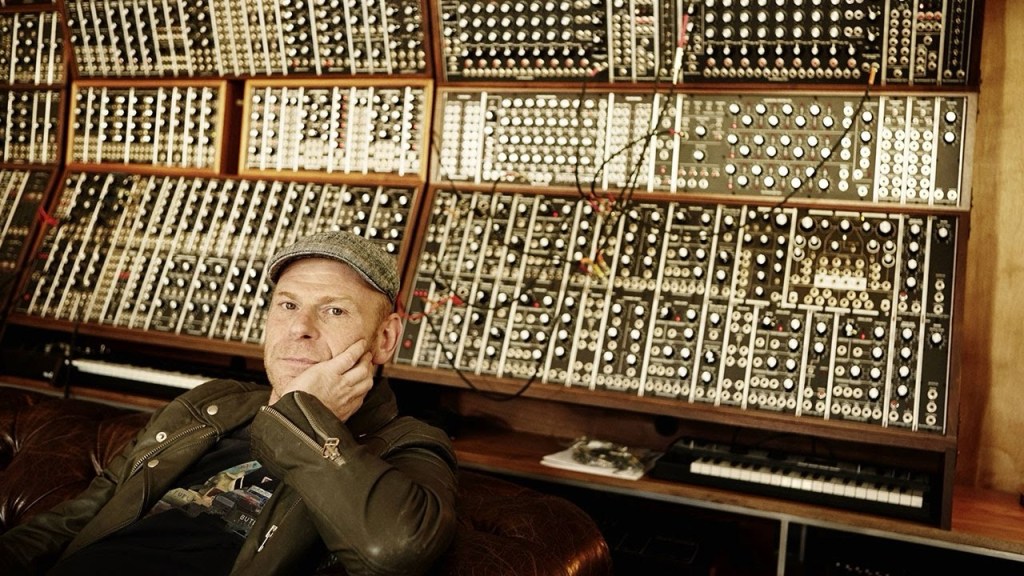
JUNKIE XL. I have a thing for movie scores. (These aren’t to be confused with soundtracks, which feature songs from one or a variety of artists.) As I listen and check the credits, I often find myself seeing some names again and again. Hans Zimmer is one of them. (I even wrote a piece about him.) Another is Tom Holkenborg, who sometimes performs under the name Junkie XL.
For the longest, I didn’t know how much Holkenborg had written. There’s always one soundtrack that truly captivates me. In one particular case, it was the music to the movie Black Mass. The use of cellos left me positively gobsmacked when I wasn’t on the verge of tears.
Not long after, I learned about the two “sides” of Tom Holkenborg. Junkie XL was credited with movies like Black Mass and Batman v Superman (which he wrote with Zimmer), among many, many others. Holkenborg’s real and stage names took credit for video game compositions and as a multi-instrumentalist. Take some time with his discography. Junkie XL is a busy, busy man. And he’s well worth hearing.
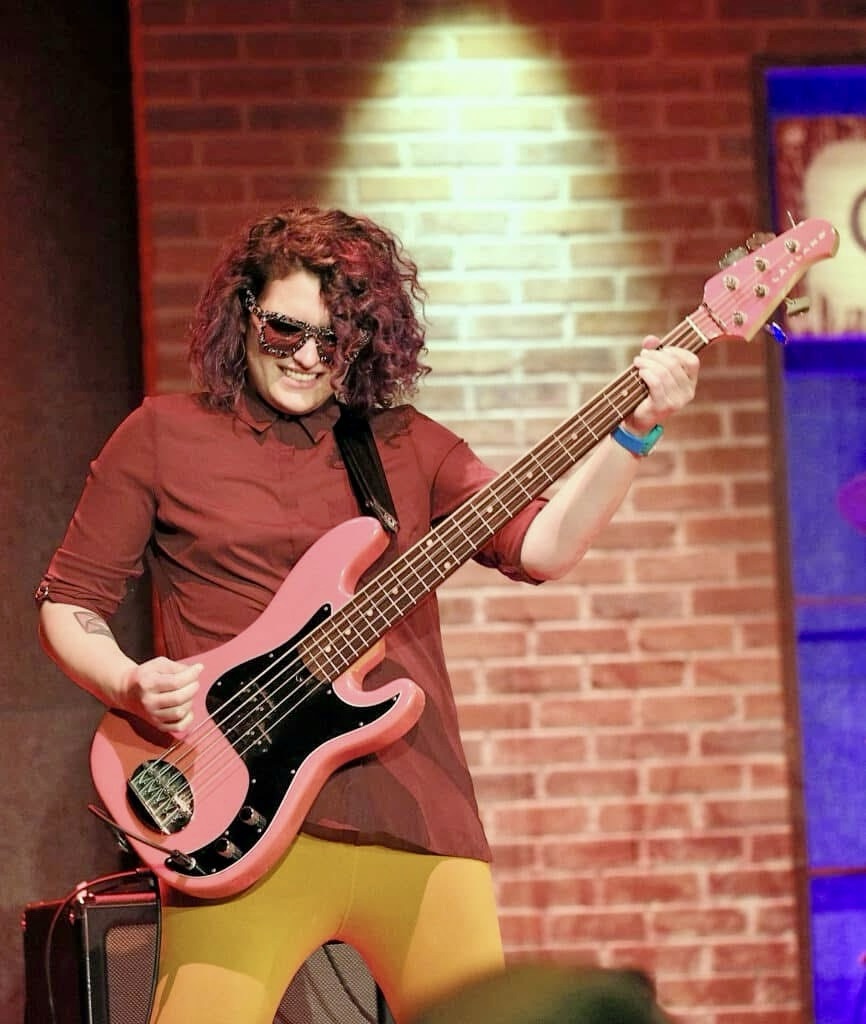
JULIE SLICK. Like Miles Davis, Frank Zappa and a few others, Adrian Belew has a knack for surrounding himself with amazing musicians. One of them is bassist Julie Slick, who — despite recently turning 40 — has always had talent well beyond her years.
Slick was just 20 when she joined Belew’s Power Trio along with her 18-year-old brother Eric. Their impact was felt immediately, no doubt helped by the skills they put on display at Paul Green’s School of Rock in Philadelphia, where they already knew some Zappa tunes. Once Belew played those tunes with the siblings, he knew he had what he needed. Belew even wrote a musical suite called e for his new trio. The album was recorded live in the studio, putting the group’s talents on full display. And they are something special!
While Eric has since moved on to other projects, Julie has remained by Adrian’s side. When she’s not working with him, Slick also has some terrific solo albums, like Terroir. She also works as half of Echotest along with fellow bassist Marco Machera. She has other projects as well. Julie has a knack for staying busy.
It’s hard to believe he been listening to Julie for 20 years. I was captivated then, and I’m captivated now. I can only imagine what the future holds.
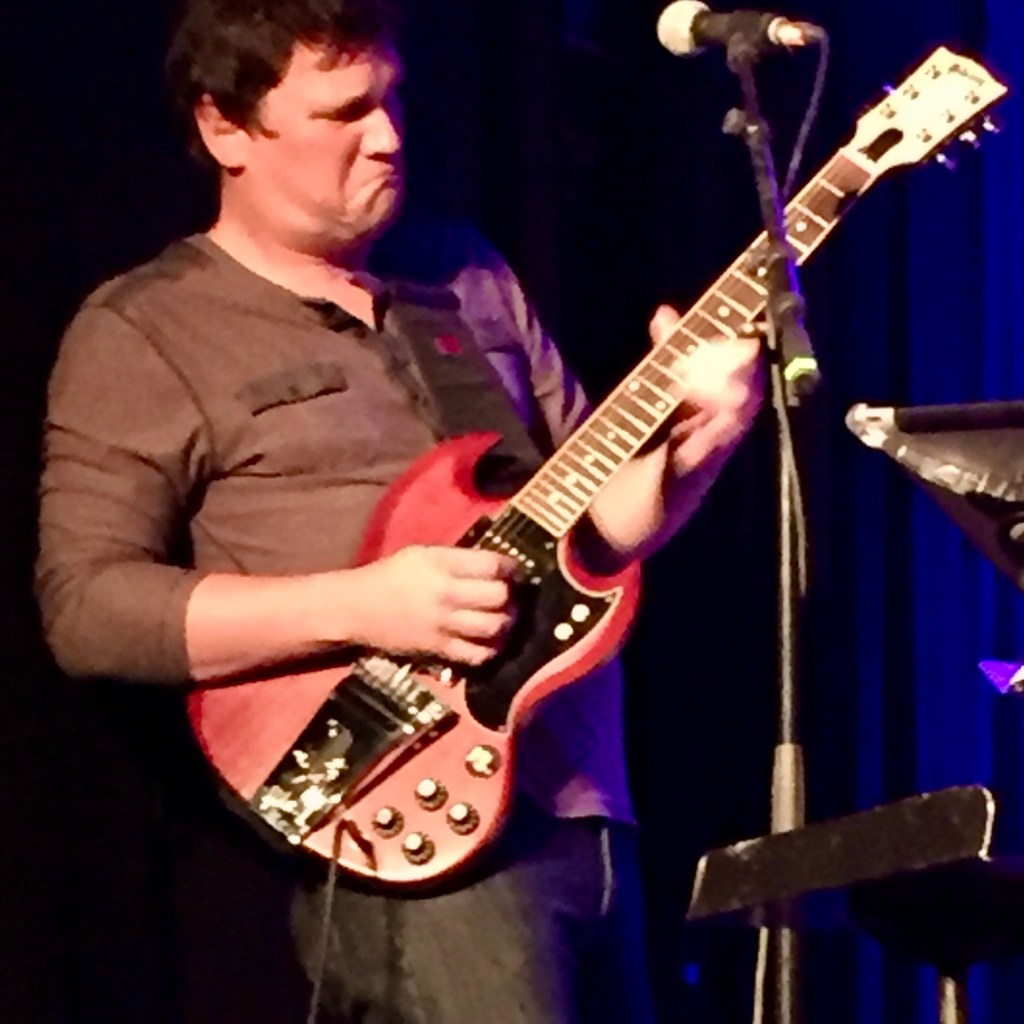
CHRIS SIEBOLD. A Chicago-based guitarist, Chris is one of those musicians who’s so talented, it makes you as want to scream. He makes me look at my guitars and ask, “Why do I even bother?”
I’ve never not seen Chris play music that isn’t complicated, and pull it off as easily as walking to the kitchen from the living room. The first time I saw him was at Progtoberfest in 2017, where he was part of the Chicago Zappa Ensemble. The next year he was part of a quartet dutifully reproducing Bruford’s album One of a Kind. Chris got to be Allan Holdsworth. Easy peasy, right?
Since then, I’ve seen Chris pay tribute to Jeff Beck, reproduce Frank Zappa’s Hot Rats album, as a solo artist, and as part of an extraordinary fusion band called Kick the Cat. There is nothing this guy can’t play!
Chris has even been patient enough to give me a couple of guitar lessons. He is what we call “good people.” Everyone needs to know about his talent.
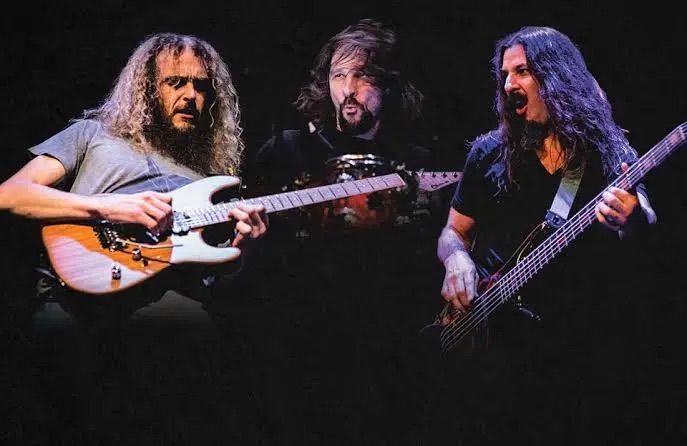
THE ARISTOCRATS. There are supergroups and there are supergroups. The Aristocrats are most definitely the latter.
This power trio has enough talent onstage to fill a stadium. Guthrie Govan (guitar), Bryan Beller (bass), and Marco Minnemann (drums) are often found as sidemen for other artists. But make no mistake: each has frontman talent. Together, the sound of this band is like a tsunami coming off the stage.
What’s a good entry point? I suppose the live albums, like Culture Clash Live or Freeze! Live in Europe are fantastic table-setters. Nothing like listening to pure talent operating without a net.
With the Aristocrats, we truly learn the difference between rock stars and musicians.
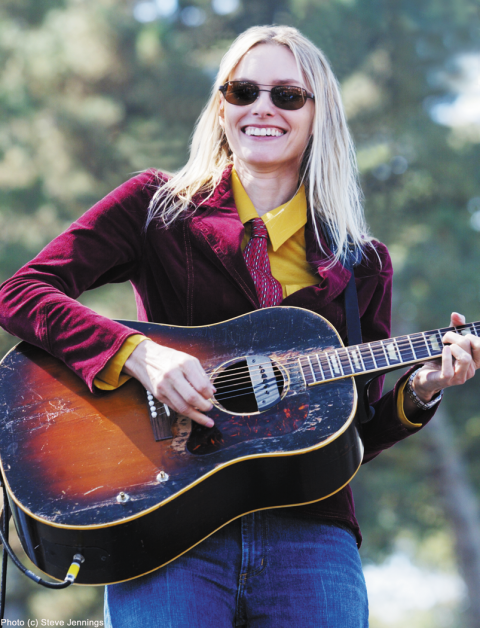
AIMEE MANN. While I was fully aware of the band Til Tuesday and her cameo appearance on Rush’s song “Time Stand Still,” Aimee Mann didn’t really enter my life until she released the album Bachelor No. 2 in the year 2000. Just like that, she was catapulted to the top of my list of favorite singer/songwriters.
Mann has a knack for getting to the heart of pathos, dysfunction, and angst like few others. Sometimes her lyrics are metaphors. Sometimes they tackle the subjects head-on. Either way, there’s rarely any mistaking what she’s talking about. It may be somber, but it’s incredibly well written!
Mann’s albums may not be what you play at a wild party, but there’s a time and a place for anything musical. Aimee Mann will always have a niche.
Stay tuned for Part II later this week.
#cirdecsongs
If you would like to have your music reviewed or have your band photographed while in Chicago, contact me at cirdecsongs@gmail.com
 CirdecSongs