(Cover photo by Adam Bielawski)
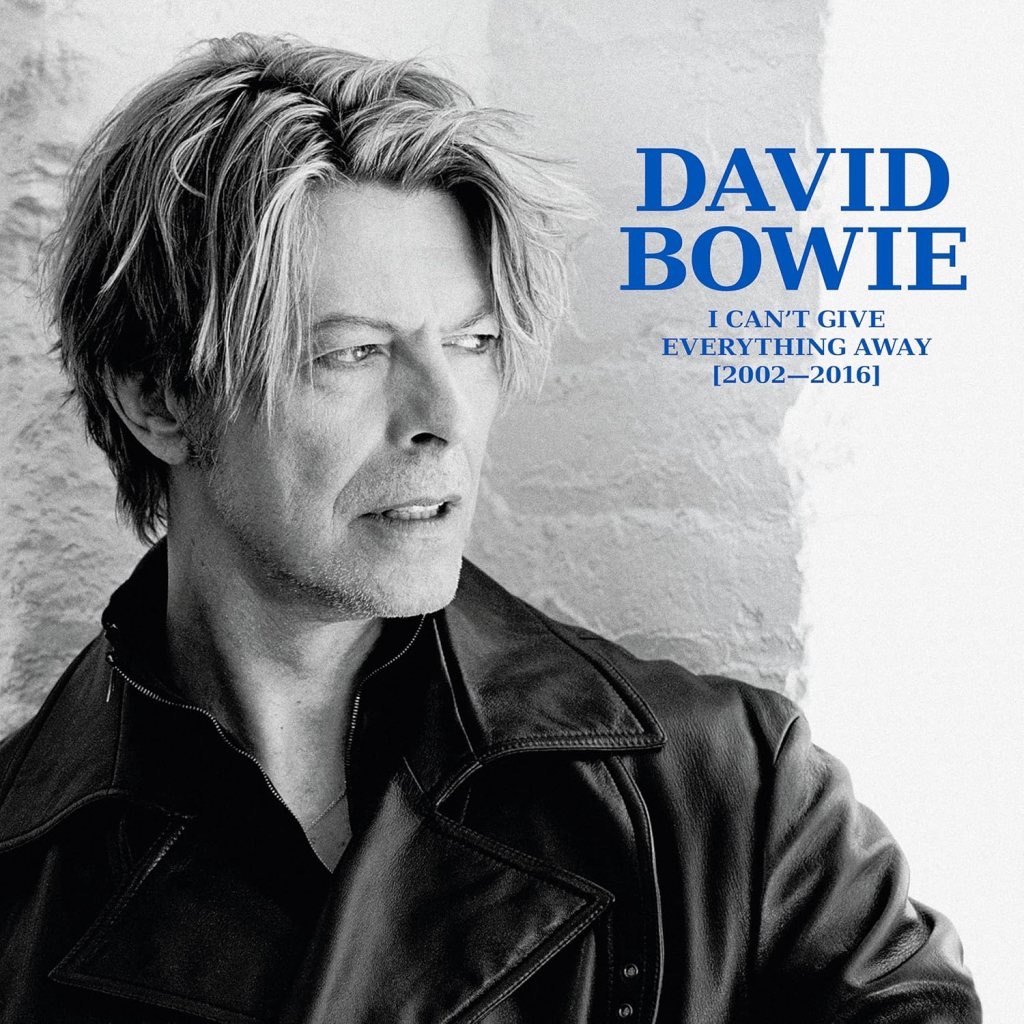
DAVID BOWIE, I Can’t Give Everything Away 2002-2016 (Parlophone Records, 2025).
Editor’s Note: David Bowie means the world to me. He has since I heard “Space Oddity” when I was six. The more I listened to the music in this box, the more personal it became. Needless to say, my objectivity pretty much went out the window. So, if you came here looking for a cold and neutral review of this collection, you might want to look somewhere else. That being said, I hope you’ll appreciate the joy I experienced while letting this music carry me away.
The world became a darker place when David Bowie left us for the astral plane in January of 2016. As fans, we are fortunate to have five-plus decades of music to soothe our feelings of loss. Since his passing, multiple box sets have been released focusing on distinct periods of Bowie’s career. I Can’t Give Everything Away is the sixth such box, covering his output between 2002 and the end of his life.

Compared to his seventies output, these final 15 years might look like there wasn’t much recorded output. But that isn’t the case. Bowie’s recordings didn’t just come from the studio. Many live shows were recorded and his music also found its way to the Broadway stage.
More importantly, Bowie’s final recordings continued to free him of his classic alter-egos like Ziggy Stardust and The Thin White Duke. The personae he took on until the end was that of a supreme vocalist, composer, and instrumentalist. This can be whittled down to a single title: Icon.
The box set’s name comes from the very last song of Bowie’s last studio album, Blackstar, which was released just a couple of days before he passed away. Bowie knew what was coming as his cancer had continued to advance, and the music gods were gracious enough to allow him to finish his final work.
The box is a collection of four studio albums, a live album, a concert recording from 2002, the music from the Broadway show Lazarus, and an extensive collection of b-sides, radio edits, and remixes. Over 12 CDs, there is more than enough to keep the buyer occupied. Let’s break it on down.
But first, a confession.
Bowie and I kind of parted ways in the eighties. Let’s Dance is a perfectly good pop album, but my tastes lay elsewhere. I also had little interest in Tonight or Never Let Me Down. It was the band Tin Machine — featuring Bowie, guitarist Reeves Gabrels, and the rhythm section of Hunt and Tony Sales — that got me paying attention to what Bowie was doing again. That being said, Black Tie White Noise also eluded me, as I was in the midst of my jazz and Alternative rock period. Bowie didn’t fit. One of these days, I’ll get back to those records.
It was the 1995 concept album Outside that made me a born again Bowie fan. Why? Well, it just … resonated with me. Miles Davis used to say the music he loved “got all up in my body.” That’s what Outside did to me. The ‘97 follow-up Earthling — which was geared around electronics and “drum and bass” music stylings — absolutely blew me away! It remains among my all-time favorite Bowie releases.
From then on, I was all over anything Bowie.
Now to the matter at hand. Here are some highlights.
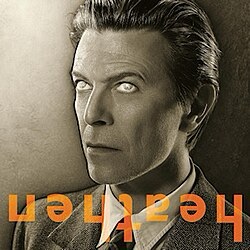
HEATHEN (2002). My love for this album comes down to one word: “Sunday.” Bowie’s voice had never sounded better. Deep, earnest, soulful … all other “pretenses” had been shoved aside. Bowie was just SINGING. And I LOVED it. The rest of the album is just as solid. These songs aren’t really meant for dancing, but they most definitely are for grooving. Some songs are heavier than others, but all of them put me on a plane that felt on par with “Space Oddity” or “The Man Who Sold the World.” This is one album that will never get old.
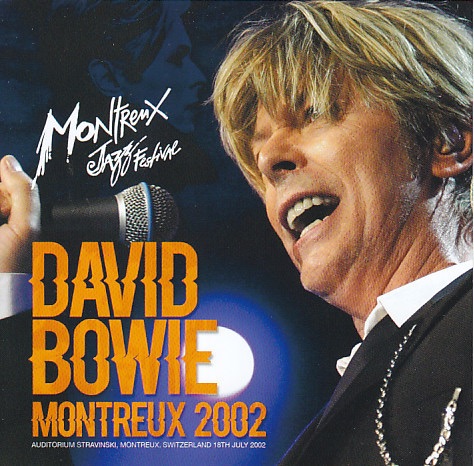
Bowie took a MONSTER of a band on the road behind Heathen, which brings us to the performance at the legendary Montreux Jazz Festival in July of ‘02. The band was full of talents like Earl Slick, (guitars), Gail Ann Dorsey (bass and vocals), Mike Garson (keyboards), and Sterling Campbell (drums), among others. Not only did they bring the songs from Heathen to the next level, but they elevated classics like “Life On Mars” and “Ashes to Ashes” as well. A great live band is all about chemistry. This band had it, and then some!
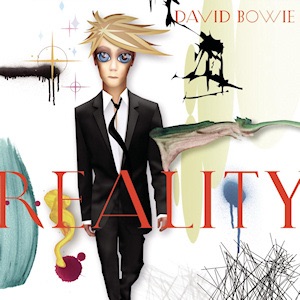
REALITY (2003). Bowie decided to write an album around this live band, as Heathen revolved around studio aces (some of whom became part of this group). Bowie’s writing and the band’s efforts produced Reality, a record that could be seen as being a bit more “catchy” than its predecessor, but it’s still very good. “New Killer Star” is my personal pull from this album. It’s got the kind of groove and energy that sends me straight to my guitar. The songs have an almost yin/yang quality to them as they pour forth. “New Killer Star” makes you grin, but things don’t come much more melancholy than “Bring Me the Disco King.” Between Bowie’s pathos and Garson’s positively brutal piano lines, the song produces a deeply introspective finale.

A REALITY TOUR (2003). And just like that, it was time to go back on the road. It was during this tour the band produced one of my all-time favorite live albums, A Reality Tour. Simply put, it’s 2 1/2 hours of a brilliant band firing on all cylinders in front of a huge crowd in Ireland. From the opening riffs of “Rebel Rebel,” Bowie and Company had the crowd eating out of their collective hands. The sheer joy they exhibit playing “New Killer Star” is more than convincing evidence. It’s nothing short of one of the best musical rollercoaster rides I’ve ever taken. To know me is to know I despise large-venue concerts in person. But I might have given up a valuable body part to make this gig.
Yep … David Bowie completely solidified his “Icon” status. The Reality tour was his last. And then — for the most part — he was gone.
For a while.
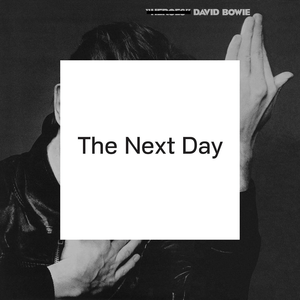
THE NEXT DAY (2013). Bowie had been wowing audiences via studio and stage for decades, so no one could blame him for taking a few steps back from musical life. A health scare involving his heart in 2004 more than contributed to Bowie pumping the musical brakes. There were the occasional stage appearances and a couple of scattershot recordings, but that was all we got. Perhaps, it seemed, David Bowie had called it a day.
What we didn’t know was that Bowie and producer Tony Visconti had been quietly and very secretly been recording new music during 2011 and ‘12. Those efforts reached us by way of The Next Day in March of 2013. Is this my favorite Bowie ever? No. But it’s still plenty good.
And what an interesting choice for cover art, as Bowie merely presented a “redacted” (albeit in white) replica of his Heroes album. This was used to signify the passage of time and the importance of memories. Bowie often wrote deep and self-reflective songs. This album is a collection of them. It’s a powerful statement.

BLACKSTAR (2016). In 2014, Bowie decided to keep another big secret from his fans: he had been diagnosed with liver cancer. Next to no one knew about it. Still, Bowie remained quietly busy. In 2015, he debuted a Broadway musical called Lazarus. He appeared publicly for the debut performance, and then he slipped away from the public eye.
During the first five months of ‘15, Bowie recorded what would be his final studio album, Blackstar. It is a fascinating and eclectic mix of musical styles brought to life by jazz saxophonist Donny McCaslin and his band. According to Visconti, Bowie planned this album as his final musical gift to the world. Songs like “Lazarus” and the title track make it abundantly clear that Bowie knew he was at the end of his life. The accompanying video for “Lazarus” is positively haunting. The album’s title is believed to come from the nickname for certain cancerous lesions, which resemble … well, you get it.
Blackstar was released on January 8 of 2016, Bowie’s 69th birthday. Two days later, he was gone. As swan songs go, it doesn’t get much more poetic.
The rest of the collection is positively loaded with remixes, radio edits and b-sides. There are no wasted notes. I was particularly taken by the re-imagining of “Sunday,” which removes David Torn’s trippy guitar electronics, replacing them with a more “conventional” arrangement. I’ll always love the album’s version, but if I didn’t know about it, this version would’ve worked just fine.
Talking about all the extras would simply take too long. My advice: just dive in and let the adventure take you where it will. It’s well worth the trip.
David Bowie is gone, but his legacy is set in stone. Casual fans will forever associate him with his mega hits of the seventies and eighties. And that’s fine. But people like me know about that last era, when he spent a little over a decade giving us one more big-time run of musical brilliance. That brilliance can be found throughout this box.
Learning about Bowie’s passing ranks among my worst days ever. This box set may not make up for his absence, but it certainly helps us remember why we loved him so. And we thank him for it.
#cirdecsongs
If you would like to have your music reviewed or have your band photographed while in Chicago, Illinois, please contact me at cirdecsongs@gmail.com
 CirdecSongs
A lovely tribute to a one-of-a-kind musician. Thanks, Ced.
LikeLiked by 1 person