The road of music discovery is replete with happy accidents.
One such stumble took place in the fall of 1990, when I was an airman newly assigned to Yakota Air Base in Japan.
Military members in the U.S. Air Force did the vast majority of their retail shopping at the base exchange, or BX. The prices were good, and we didn’t have to pay sales tax!
My BX had a surprisingly good selection of music for a military instillation. (Or am I just too snobbish to believe a large amount of people could have the same eclectic music tastes I did? Yeah … that’s probably it.) Their jazz section was pretty well stocked.
One day, I found myself thumbing my way through the browser racks, which I did nearly every time I visited the store. Sometimes I wanted to see if they stocked the same titles I already owned. Sometimes I was looking for something new from one of my favorites. This time was the latter.
I had reached the “Jazz – M” name card (you know … where unknown or less prolific artists found themselves sorted by last or band name) when my fingers tripped over a band called The Manhattan Project. Curiosity led me to pull the disc from the bin to check out the credits.
Holy crap!
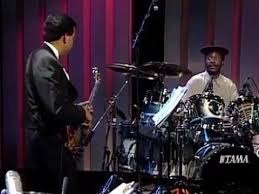
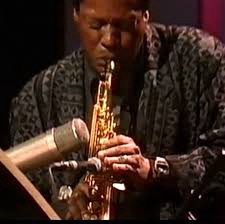
I now held in my hand a band consisting of bassist Stanley Clarke, saxophonist Wayne Shorter, and drummer Lenny White. I was big fans of all of them! Clarke and White had been part of Return to Forever, probably my favorite fusion band. I got into Shorter because of his work with Miles Davis. Now here they were, together, on something new.
Sold!
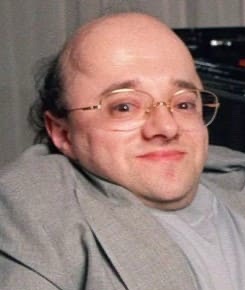
I had never heard of pianist Michel Petrucciani. But if he was good enough to play with these heavyweights, then he was good enough for me. There were also two synthesizer players in Pete Levin (brother of legendary bassist Tony) and Gil Goldstein. Their contributions added some very nice texture to the proceedings.
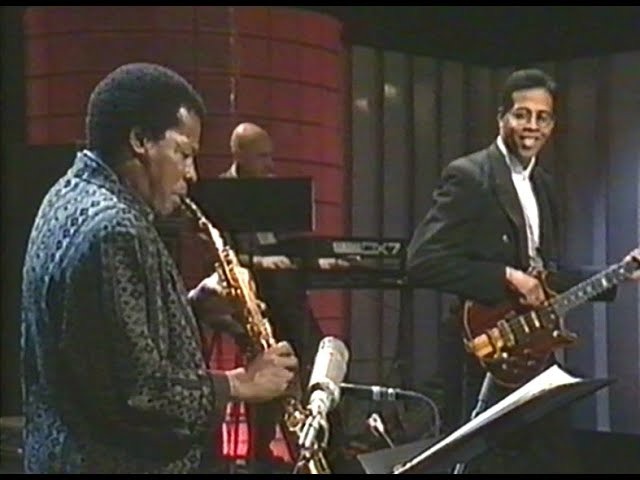
The band’s formation was White’s brainchild. He and Goldstein arranged the band’s nine tunes.^ Not that a lot of effort seemed necessary to me. Just call out the tune, play the “head,” and turn these guys loose!+
The group got together for a one-off performance at Chelsea Studios in New York City (making the band name’s origin obvious) on December 16 of ‘89. The intimate show was recorded live in front of a small audience.
I was sold from the opening note, a tune White wrote called “Old Wine, New Bottles.” The groove was full of fire, even if it was a bit laid back. It was almost as though the band were feeling one another out, as live performance is vastly different from rehearsal. Nevertheless, it didn’t take long for the band to find its groove.
It probably helped that the band maintained a simple in-song pattern: song head, followed by solos from Shorter, Petrucciani, and Clarke, usually in that order. The set also seemed to be divided into halves, with the first four songs played acoustic (save for the synths, which were a constant throughout) and the next four electric. I realize this is a funny statement, given that the only player to “go electric” is Clarke, who changed basses for the next four tunes. But the electric bass opened up the possibility of subtle funk runs, giving the music a little more raw aggression.
My personal favorite moment comes from Clarke’s positively blistering solo on “Goodbye Porkpie Hat,” a tune written by another bassist, Charles Mingus. Though I rather doubt Mingus would ever have conceived of this solo! More than a couple of my friends were certain this was a guitar solo until I showed them otherwise.
It didn’t take long for this album to become one of my favorite jazz releases, which remains true to this day. It was 25 years before I learned about the video release, which I found on eBay. As it turns out, my DVD was a DVD-R copy taken from a laserdisc (remember those?). Oh, well. As far as I’m concerned, it remains a win. After all, this was long before YouTube.
Speaking of YouTube, I was able to find the video, which features a MUCH better picture than the disc I paid $30 or $35 dollars for. What can I say? I’m a collector and it was a different time.
So, here is that video. Enjoy it and just imagine what was for just one night.
https://youtu.be/Hs1BLCv8UuU?si=NGVVxkvjBwfRV6wR
By the way, I actually saw Clarke and Shorter together in Tokyo for a variation of this show c. 1992. The piano stool was now occupied by Herbie Hancock and Omar Hakim played drums. There were no synths. It remains of of my favorite concert experiences of all time.
But it was no Manhattan Project.
^ — The CD contains eight of the nine tunes. The video features just seven songs, one of which is “Autumn Leaves,” featuring vocalist Rachelle Ferrell. While I can live without the vocal track just fine, I still wonder why the entire set wasn’t featured on the video.
+ — Naturally, these musicians improvised their solos. Perhaps one of the reasons the entire set isn’t on video is because at least one of the tunes is edited slightly for CD. Petrucciani lost his way during his solo on “Summertime.” Shorter could hear and see his pianist flailing, so he jumped in to “rescue” him. That rescue is what makes it to the CD.
#cirdecsongs
If you would like to have your music reviewed anytime or to have your band photographed while in Chicago (USA), please contact me at cirdecsongs@gmail.com
 CirdecSongs